AC Installation St. Petersburg | Total Air HVAC Replacement
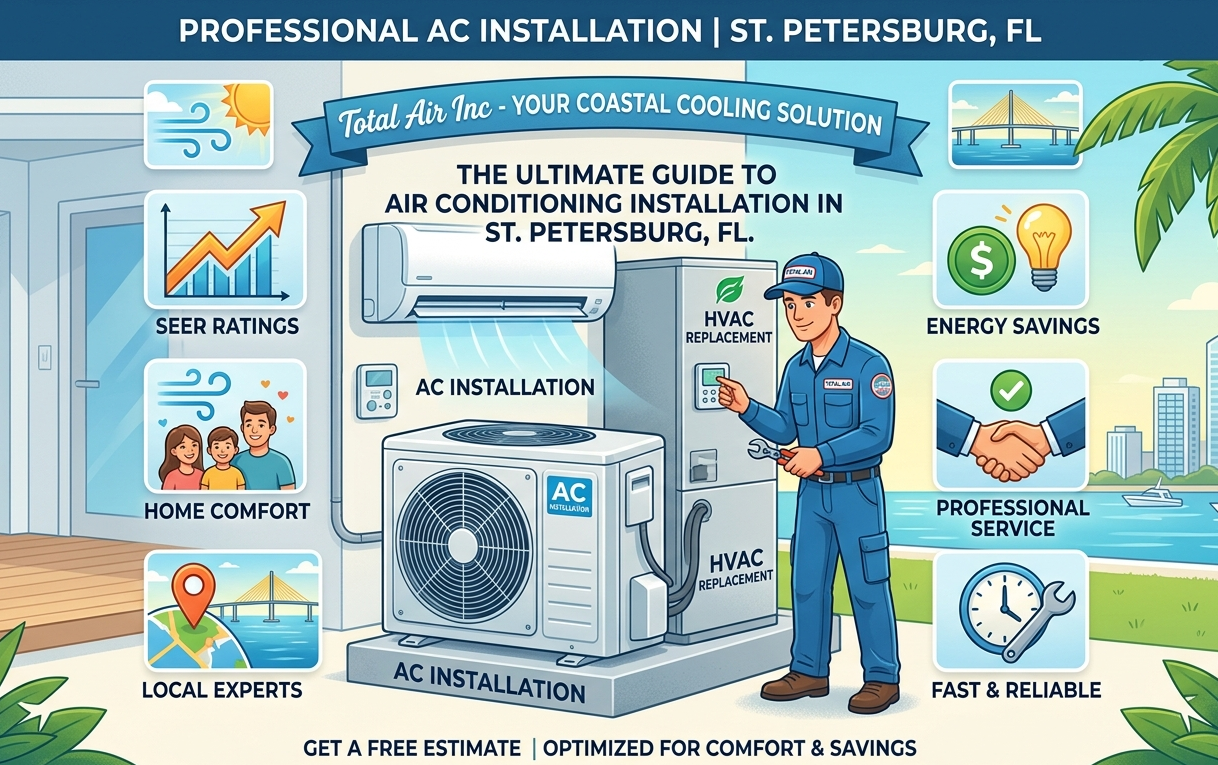
The Ultimate Guide to Air Conditioning Installation in St. Petersburg, FL
Living on the Florida coast comes with a lot of perks—beautiful beaches, endless sunshine, and a laid-back lifestyle. But it also comes with a serious requirement: a highly reliable, high-performing air conditioning system. When summer temperatures climb into the 90s and the humidity hits suffocating levels, your home’s AC isn't a luxury; it’s a critical component of your safety, health, and daily comfort.
If your current cooling system is struggling to keep up, blowing warm air, or causing your monthly utility bills to skyrocket, it may be time to consider a professional upgrade. Investing in a new air conditioning installation can feel overwhelming, but understanding the process, knowing when to replace your unit, and choosing the right local partner can save you thousands of dollars and years of frustration.
When is it Time for a New Air Conditioning Installation?
Many homeowners wait until their cooling system suffers a catastrophic breakdown before shopping for a replacement. While a total system failure is a definitive sign, there are several subtle indicators that your AC is nearing the end of its lifespan. Recognizing these signs early allows you to plan your installation on your own terms, rather than dealing with an emergency situation during the hottest week of July.
1. Your System is Over 10 Years Old
On average, a central air conditioning unit operating in the harsh, humid environment of Pinellas County lasts between 10 and 15 years. The salty coastal air, intense heat, and near-constant operation put immense stress on mechanical components. Even if a 12-year-old system is still running, it is likely operating at a fraction of its original efficiency and approaching a major component failure.
2. Spiking Energy Bills
Have you noticed your Duke Energy bill climbing higher and higher each month, even though your usage habits haven't changed? As an HVAC system ages, its internal components wear down, forcing the compressor and fan motors to work significantly harder to produce the same amount of cool air. This extra effort translates directly into increased power consumption.
3. Frequent and Costly Repairs
An occasional minor repair is normal over an HVAC system’s lifespan. However, if you find yourself calling a technician multiple times a year for refrigerant leaks, electrical failures, or fan motor replacements, those costs accumulate quickly. A good rule of thumb is the "5,000 Rule": multiply the age of your system by the cost of the repair. If the total exceeds $5,000, money is better spent on a new, warrantied installation.
4. R-22 Refrigerant Dependency
If your air conditioner was manufactured before 2010, there is a high probability it uses R-22 refrigerant (commonly known as Freon). Due to environmental regulations, R-22 has been completely phased out and banned from production or import. If your older system develops a refrigerant leak, sourcing recycled R-22 is exceptionally expensive. Replacing the unit with a modern system utilizing eco-friendly, readily available refrigerants is the only sustainable path forward.
5. Uneven Cooling and Humidity Control
Your air conditioner is responsible for two primary tasks: lowering the air temperature and removing moisture from the air. If certain rooms in your house feel like saunas while others are freezing, or if the indoor air feels sticky and humid, your system is failing to regulate your home's microclimate effectively.
The Hidden Costs of an Improperly Sized AC Unit
One of the most critical aspects of an air conditioning installation is calculating the correct system size for your specific home layout. "Sizing" in the HVAC world does not refer to the physical dimensions of the equipment, but rather its cooling capacity, measured in British Thermal Units (BTUs) or tons. One ton of cooling capacity equals 12,000 BTUs per hour.
An inexperienced or careless contractor might guess the required size based solely on square footage, or worse, simply install the exact same size as your old unit without verifying its accuracy. This can lead to two severe performance issues:
The Oversized System (Short-Cycling)
If an AC unit is too large for your home, it will cool the indoor spaces incredibly fast. While this might sound ideal, it creates a phenomenon known as short-cycling. The system turns on, blasts cold air for a few minutes, satisfies the thermostat, and shuts off again. Because it doesn't run long enough to pull moisture out of the air, your home will feel cold but incredibly damp and clammy. Furthermore, the constant starting and stopping places massive electrical strains on the compressor, leading to premature equipment failure and massive energy spikes.
The Undersized System (Constant Running)
Conversely, a system that is too small for your home's thermal load will run continuously without ever reaching your target temperature. It will struggle day and night, running up your electric bill while leaving your living spaces uncomfortably warm. Because the system never gets a rest, its lifespan will be shortened drastically due to continuous mechanical wear.
A professional HVAC installer protects you from these issues by performing a comprehensive Manual J Load Calculation. This evaluation considers your home's total square footage, ceiling heights, insulation quality, window placements, directional orientation to the sun, and local climate data to determine the exact tonnage your property requires.
Central AC vs. Ductless Mini-Split Systems
When planning an upgrade, you have options regarding how air is distributed throughout your home. The two most prominent choices for Florida homeowners are traditional central air conditioning and modern ductless mini-split systems.
+-------------------------------------------------------------------------+
| CHOOSING THE RIGHT HVAC SYSTEM |
+-------------------------------------------------------------------------+
| CENTRAL AIR CONDITIONING | DUCTLESS MINI-SPLIT |
+-------------------------------------------------------------------------+
| • Uses centralized ductwork network | • No ductwork required |
| • Consistent whole-home climate | • Independent zone control |
| • Lower initial equipment cost | • Maximum energy efficiency |
| • Ideal for homes with existing ducts | • Ideal for renovations/additions|
+-------------------------------------------------------------------------+
Central Air Conditioning
Central AC relies on a split system design featuring an outdoor condenser unit and an indoor air handler. Cool air is forced through a network of hidden ducts and distributed evenly through supply vents in every room. Central systems are highly efficient at maintaining a uniform temperature across an entire house and are usually the most cost-effective solution if your home already features functional, well-insulated ductwork.
Ductless Mini-Splits
Ductless systems eliminate the need for expansive ductwork entirely. Instead, an outdoor condenser connects via small refrigerant lines directly to individual, wall-mounted air handlers inside specific rooms or "zones." This allows you to set different temperatures for different areas of your home. If you have an empty guest bedroom or a sunroom, you can turn off the cooling to those specific zones, saving significant amounts of energy. Mini-splits are an incredible choice for historic homes without room for ducts, room additions, converted garages, or homeowners seeking the absolute highest energy efficiency ratings available.
Navigating SEER Ratings, Permits, and Regulations
An air conditioning installation involves navigating local building codes and energy guidelines. Understanding these standards ensures your home remains safe, efficient, and legally compliant.
Decoding the SEER Rating
The energy efficiency of a cooling system is measured by its Seasonal Energy Efficiency Ratio (SEER). This rating represents the ratio of cooling output divided by the total electric energy input over a typical cooling season.
- The higher the SEER number, the less electricity the system uses to cool your home.
- Modern regulations dictate strict regional minimums for energy efficiency.
- Upgrading an old 10-SEER unit to a modern 16-SEER or variable-speed system can drop your monthly cooling costs by 30% to 50%, allowing the system to pay for itself over time.
Why Pulling a Building Permit is Non-Negotiable
In St. Petersburg and across Pinellas County, replacing an air conditioning system requires an official municipal building permit. Homeowners occasionally wonder why this step is necessary.
The primary purpose of an HVAC permit is protecting the consumer. It mandates that a third-party municipal inspector will review the completed installation to verify that the contractor performed the work safely, followed strict electrical and structural codes, and installed equipment that meets modern energy-efficient guidelines. It also ensures proper load documentation is filed. Skipping a permit can create significant legal complications if you ever decide to sell your home, and it can even give your homeowner's insurance company a reason to deny coverage in the event of an electrical fire or storm damage.
Financing Your New HVAC Investment
A complete residential air conditioning replacement typically ranges between $8,000 and $15,000, depending on the system size, brand, SEER efficiency tier, and whether your home requires new ductwork. Because an unexpected breakdown rarely happens when it's convenient for your savings account, having flexible payment paths is essential.
Top-tier local contractors offer competitive financing solutions designed to fit varying budgets. This includes quick online applications, rapid approval times, affordable monthly payments, and even promotional windows featuring zero-interest options for qualified buyers. Additionally, installing energy-efficient systems often qualifies you for local utility rebates, such as Duke Energy incentives, alongside federal tax credits that significantly lower your net investment.
What to Look For in a Professional HVAC Contractor
The performance and longevity of your new air conditioner depend far more on the quality of the installation than the brand name on the metal box. Even the most expensive, top-of-the-line system will break down constantly and underperform if it is installed poorly. When vetting local HVAC contractors near St. Petersburg, look for the following qualifications:
- Licensing and Insurance: Never work with an unlicenced technician. Verify their active state license number (e.g., Class A Certified Air Conditioning Contractor) and confirm they carry full liability and worker's compensation insurance.
- Industry Certifications: Look for teams employing NATE-certified (North American Technician Excellence) professionals, which indicates the highest standard of technical training in the industry.
- Established Local Reputation: Choose a company with deep roots in the community, backed by excellent online reviews, strong manufacturer partnerships (like Amana or Mitsubishi Electric), and a proven track record of standing behind their work with comprehensive labor warranties.
Experience the Total Air Difference
When it’s time to upgrade your home's comfort, you need a partner who understands the unique challenges of the coastal Florida climate. For over two decades, our factory-trained and NATE-certified professionals have delivered top-tier residential and commercial cooling solutions throughout Pinellas County.
We pride ourselves on offering upfront, transparent pricing, customized system sizing, and flawless execution on every project. We handle everything from pulling the necessary municipal permits to setting up flexible financing plans that keep your wallet comfortable. Don't spend another season dealing with an inefficient, underperforming cooling system. Reach out to the experts today to schedule a hassle-free consultation and secure your professional air conditioning installation to ensure your home stays perfectly cool all year long.