How Attic Insulation Leads To A Lower Electric Bill
In the quest for a more sustainable home and a lower cost of living, we often look at high-tech gadgets or expensive window replacements. However, one of the most effective tools for energy efficiency is sitting right above your head, likely gathered in dusty layers: attic insulation.
For many homeowners, the attic is "out of sight, out of mind." Yet, it is the primary thermal frontier of your house. Without a proper barrier, your home acts like a giant chimney in the winter and a greenhouse in the summer. Understanding the mechanics of heat transfer and the role of insulation can transform your home from an energy sieve into a thermal fortress.
The Science of Heat Transfer
To understand why insulation saves money, we have to look at how heat moves. Heat is restless; it always seeks a balance, moving from warm areas to cool ones through three methods:
- Conduction: Heat moving through solid materials (like your ceiling drywall and wooden joists).
- Convection: Heat circulating through air currents.
- Radiation: Heat beaming directly from the sun onto your roof.
During the summer, your roof absorbs massive amounts of solar radiation. This heat conducts through the roofing materials and radiates into the attic space, where temperatures can soar to 150°F or higher. Without adequate insulation, that heat conducts right through your ceiling into your living space. Your air conditioner then has to work overtime to remove that "imported" heat, leading to a spike in electricity usage.
In the winter, the process reverses. The heat you pay to generate in your living room rises (convection) and tries to escape through the ceiling into the cold attic. Proper insulation provides thermal resistance, measured as R-Value, which keeps the heat where it belongs.
How Insulation Reduces the Load on Your HVAC
Your Heating, Ventilation, and Air Conditioning (HVAC) system is likely the largest consumer of electricity in your home. When your attic is poorly insulated, your HVAC system enters a cycle of "overworking":
- Longer Run Times: The system stays on longer to combat the constant infiltration of outside temperatures.
- Frequent Cycling: The thermostat detects a temperature rise (or drop) more quickly, causing the unit to kick on and off frequently, which is the most energy-intensive part of its operation.
- Increased Wear and Tear: Like a car driven constantly at redline, an overworked HVAC system breaks down faster, leading to expensive repairs and premature replacement.
By stabilizing the indoor temperature, insulation allows your HVAC to run efficiently and rest more often. This doesn't just lower your monthly bill; it extends the life of your most expensive home appliance.
Common Types of Attic Insulation
If you’re looking to upgrade, you generally have three main options, each with unique benefits:
Insulation TypeMaterialBest For...Fiberglass BattsRecycled glass spun into fibersStandard joist spacing; DIY-friendly.Blown-In CelluloseTreated recycled paper/cardboardFilling irregular gaps and hard-to-reach corners.Spray FoamPolyurethane foamCreating an airtight seal and high R-value per inch.
Export to Sheets
The "Chimney Effect" and Air Sealing
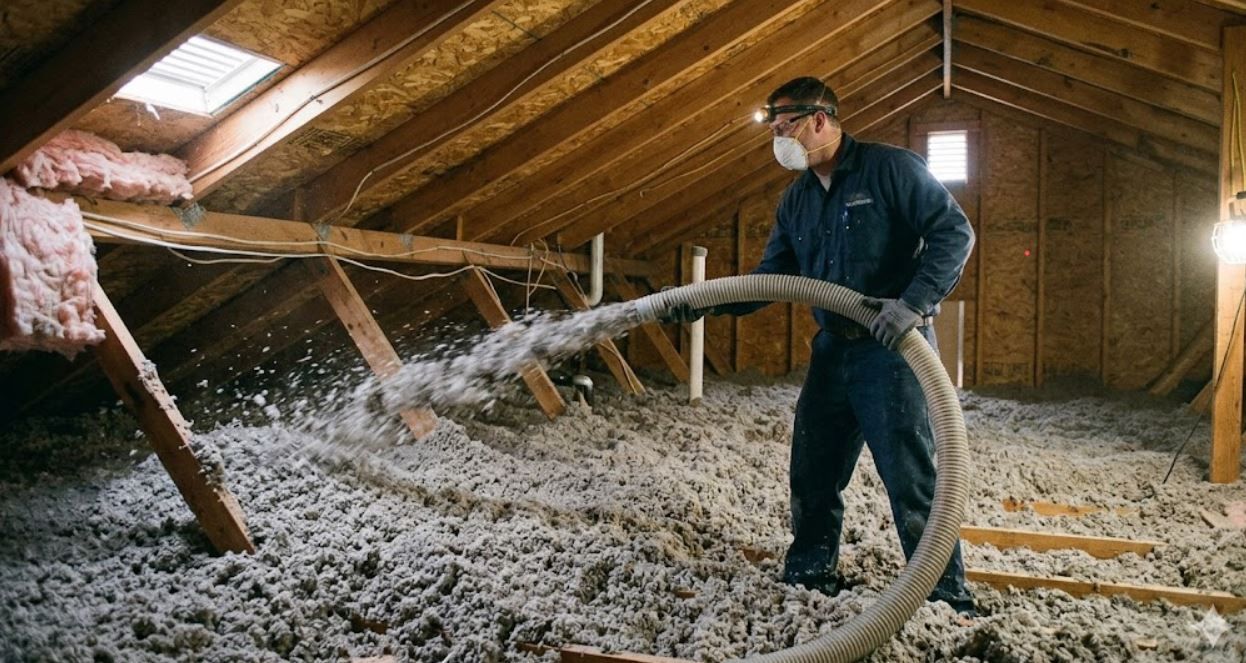
Insulation is only half the battle. Many homes suffer from the "Chimney Effect," where air leaks through recessed lights, plumbing stacks, and electrical wires. These small gaps allow conditioned air to escape into the attic.
Before adding new insulation, it is vital to air seal these penetrations. Think of it like putting on a wool sweater (insulation) over a windbreaker (air seal). The sweater keeps you warm, but only if the wind isn't blowing right through the fabric.
Real-World Financial Impact
According to the Department of Energy, homeowners can save an average of 15% on heating and cooling costs (or roughly 11% on total energy costs) by air sealing and adding insulation in attics. Depending on your climate and current insulation levels, some households see savings of up to 20% to 30% on their monthly electric bills.
While there is an upfront cost to installation, the "Return on Investment" (ROI) is among the highest of any home improvement project. Unlike a kitchen remodel, which offers aesthetic value, attic insulation pays you back every single month in the form of a smaller utility statement.
Conclusion
Upgrading your attic insulation is one of the smartest moves a homeowner can make. It tackles the root cause of high electric bills—unwanted heat transfer—rather than just treating the symptoms. By creating a consistent thermal envelope, you enjoy a more comfortable home, a longer-lasting HVAC system, and a significantly lighter financial burden.