
Mastering Home Comfort with Mitsubishi Ductless Mini-Splits
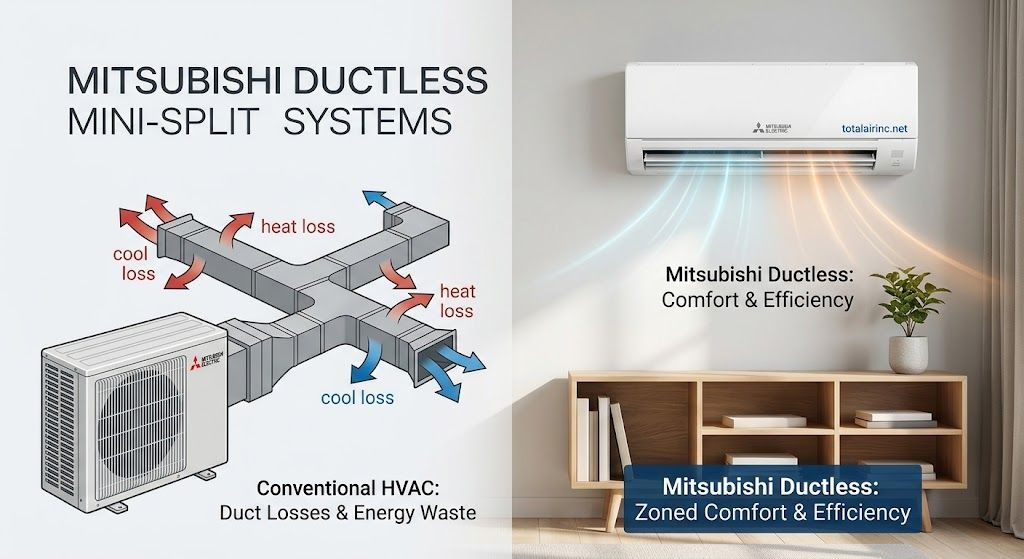
Achieving optimal indoor temperature control while keeping utility costs under control is a primary concern for modern homeowners. Traditional heating and cooling systems often struggle to deliver balanced airflow across every room, resulting in hot spots in the summer, cold zones in the winter, and inflated electric bills. Ductless HVAC technology addresses these limitations by providing targeted, high-efficiency heating and cooling directly where it is needed most.
Among the various options available today, Mitsubishi Electric ductless mini-split systems stand out as an industry standard for energy efficiency, whisper-quiet operation, and long-term reliability. Whether you are upgrading an older home that lacks central ductwork, building a new room addition, or seeking complete multi-zone climate control for your entire house, ductless heat pump systems offer a flexible and scalable solution.
What Is a Mitsubishi Ductless Mini-Split System?
A ductless mini-split system is a zoned heating and cooling setup that operates without the sprawling sheet-metal air ducts required by conventional central HVAC systems. Traditional central units push conditioned air through a network of ducts, which often leads to significant thermal loss—sometimes losing more than 30 percent of total cooling power due to leaks, uninsulated attic spaces, or poor duct design.
Ductless mini-split systems eliminate this energy waste entirely by transferring refrigerant directly between a single outdoor condenser unit and one or more indoor air handlers via small, copper tubing.
Primary System Components
- Outdoor Condenser Unit: Houses the compressor and coil, operating outside to extract heat during winter or discharge heat during summer.
- Indoor Air Handlers: Sleek, wall-mounted, ceiling-recessed, or floor-standing units mounted inside individual rooms to deliver immediate heating and cooling.
- Refrigerant Line Set: A compact bundle containing copper tubing, power cabling, and a condensate drain line that passes through a small three-inch opening in the exterior wall.
- Smart Controllers: Handheld wireless remotes, wall-mounted thermostats, or smartphone apps that give occupants exact control over temperature and fan speed per room.
Core Advantages of Mitsubishi Mini-Split Technology
Selecting an HVAC system involves evaluating energy savings, ease of installation, overall air quality, and everyday operational comfort. Mitsubishi ductless systems excel in each of these areas through advanced engineering.
CONVENTIONAL HVAC MITSUBISHI DUCTLESS INVERTER
[Compressor] [Inverter Compressor]
│ │
├── ON (100% Power Output) ├── Variable Speed Adjustments
├── OFF (0% Power Output) ├── Matches Real-Time Heat Load
└── High Energy Spikes └── Continuous Low-Energy Draw
Inverter-Driven Compressor Efficiency
Traditional AC compressors run on a simple on-and-off operational model. When the indoor temperature drifts from the set point, the compressor kicks on at 100 percent capacity, consuming a massive spike of electricity until the room cools down, after which it turns completely off. This constant cycling wastes energy and creates wide temperature fluctuations.
Mitsubishi Electric utilizes proprietary INVERTER-driven compressor technology. The compressor continuously modulates its operating speed up or down in subtle increments, automatically matching the exact thermal load of the space. By running smoothly at lower speeds for longer periods, the system maintains consistent indoor temperatures while consuming significantly less electricity.
Precision Zoned Climate Control
One of the most notable advantages of ductless systems is the ability to create customized comfort zones throughout a property. In a standard central HVAC setup, one wall thermostat controls the temperature for the entire floor or house. If an upstairs bedroom gets direct afternoon sun while a downstairs living room stays cool, someone is bound to be uncomfortable.
With a multi-zone ductless installation, every indoor unit functions as an independent zone with its own thermostat. Occupants in the home office can set their room to 70 degrees, while unused guest rooms can remain unconditioned to conserve power.
Advanced Indoor Air Quality
Dust, pollen, pet dander, and mold spores routinely accumulate inside traditional central duct networks, circulating throughout the house whenever the blower runs. Ductless air handlers eliminate ductwork as a contamination source and feature multi-stage filtration systems. Mitsubishi indoor units continuously filter out airborne allergens, dust particles, and odors, fostering a cleaner and healthier indoor living environment.
Versatile Applications for Residential Properties
Ductless heating and cooling systems accommodate virtually any residential architectural layout. Their modular nature allows for custom configurations tailored to specific challenges.
Single-Zone vs. Multi-Zone Configurations
- Single-Zone Solutions: Connects one outdoor condenser directly to a single indoor unit. This option is ideal for solving specific trouble spots, conditioning home additions, garage conversions, sunrooms, or detached workshops where extending central ductwork is impractical or overly expensive.
- Multi-Zone Solutions: Connects a single, high-capacity outdoor condenser to up to eight separate indoor air handlers. This configuration provides comprehensive whole-home heating and cooling, allowing each room or floor to be managed independently without cluttering your property's exterior with multiple outdoor boxes.
Indoor Unit Design Options
Homeowners are no longer limited to basic wall-mounted units. Mitsubishi Electric provides a variety of indoor unit form factors designed to integrate into any room layout:
- Wall-Mounted Units: The standard and most cost-effective option, installed high on an interior or exterior wall to distribute airflow evenly across the room.
- Ceiling Recessed Cassettes: Positioned flush against the ceiling between standard floor joists, offering a subtle, low-profile appearance.
- Floor-Mounted Units: Installed low on the wall near the floorboard, ideal for spaces with low sloped ceilings or replacing old radiator heaters.
- Horizontal Ducted Units: Concealed above a ceiling or inside a closet, using short, localized duct runs to condition multiple adjacent spaces quietly and discreetly.
Long-Term Energy Savings and ROI
Upgrading to an inverter-driven ductless mini-split offers measurable returns on investment. Because heat pumps transfer heat rather than generating it through electric resistance or fuel combustion, they deliver exceptional seasonal efficiency ratings.
Understanding Efficiency Metrics
When shopping for a mini-split system, look at key performance ratings:
- SEER2 (Seasonal Energy Efficiency Ratio 2): Measures cooling efficiency over a typical cooling season. Higher SEER2 ratings indicate lower electric bills. High-tier Mitsubishi models regularly achieve SEER2 ratings well above 20.
- HSPF2 (Heating Seasonal Performance Factor 2): Measures heat pump efficiency during colder months. Elevated HSPF2 scores mean lower winter heating costs compared to baseboard heaters or electric furnaces.
Eliminating duct losses, combined with zoned operation and variable-speed compressors, allows homeowners to reduce monthly heating and cooling energy usage by up to 30 to 40 percent compared to older central systems.
Choosing Professional Installation and Support
While ductless mini-splits are easier to install than full ducted networks, proper design and installation require skilled HVAC technicians. Accurate sizing calculations, precise refrigerant charge management, and optimal air handler placement are critical to maximizing efficiency and system longevity.
Working with an experienced heating and air contractor ensures your equipment is correctly sized for your home's square footage, insulation levels, and layout. Professional installation also protects your manufacturer warranty, ensuring dependable year-round comfort for years to come.
Whether you need to resolve uneven temperatures in a troublesome room or want a complete whole-home comfort upgrade, learning more about Mitsubishi ductless mini-split systems will help you make an informed decision for your space.
Frequently Asked Questions
How long does a Mitsubishi mini-split system typically last?
With routine maintenance—such as cleaning the air filters regularly and scheduling annual professional service—Mitsubishi ductless mini-splits frequently last 15 to 20 years, outlasting many standard central air units.
Can a ductless heat pump handle extremely cold winter weather?
Yes. Mitsubishi offers specialized Hyper-Heating INVERTER® (H2i®) models engineered specifically to perform in cold climates. These systems can provide 100 percent heating capacity even when outdoor temperatures drop down to 5°F and continue producing warmth at temperatures well below zero.
Are ductless systems difficult to maintain?
Maintenance is straightforward. Homeowners simply need to slide out the reusable mesh filters inside the indoor units, wash them with soap and warm water, let them dry, and reinsert them every few weeks. A licensed technician should inspect the electrical components, condensate lines, and outdoor coils annually.