Florida HVAC Fix: How To Stop Your AC 'Dirty Sock' Smell
It’s one of the most dreaded moments for a Florida homeowner during a humid summer. You’re relaxing, the house is finally reaching a comfortable temperature, and the AC is running smoothly. Suddenly, the air changes. A unmistakable, pungent odor drifts through the room.
It smells like a locker room. Specifically, it smells like dirty socks.
You sniff the air. You sniff your feet. You sniff the dog. Nope. It’s coming directly from the vents.
This phenomenon is so common that the HVAC industry has a specific name for it: "Dirty Sock Syndrome." And while it is a significant nuisance, it is rarely a sign of a mechanical failure. In fact, Dirty Sock Syndrome is almost purely a biological and chemical problem, and it is uniquely aggravated by the specific, extreme climate we face on the Treasure Coast.
The good news? You can fix it, and you can prevent it from ever coming back. Here is the NisAir guide to diagnosing, cleaning, and eradicating the dreaded AC sock smell.
The "Why" Behind the Stench: Science in Your Coils
Your air conditioner doesn't just "make things cold." Its primary job in Florida is actually dehumidification. It cools your home by removing immense amounts of moisture from the humid air.
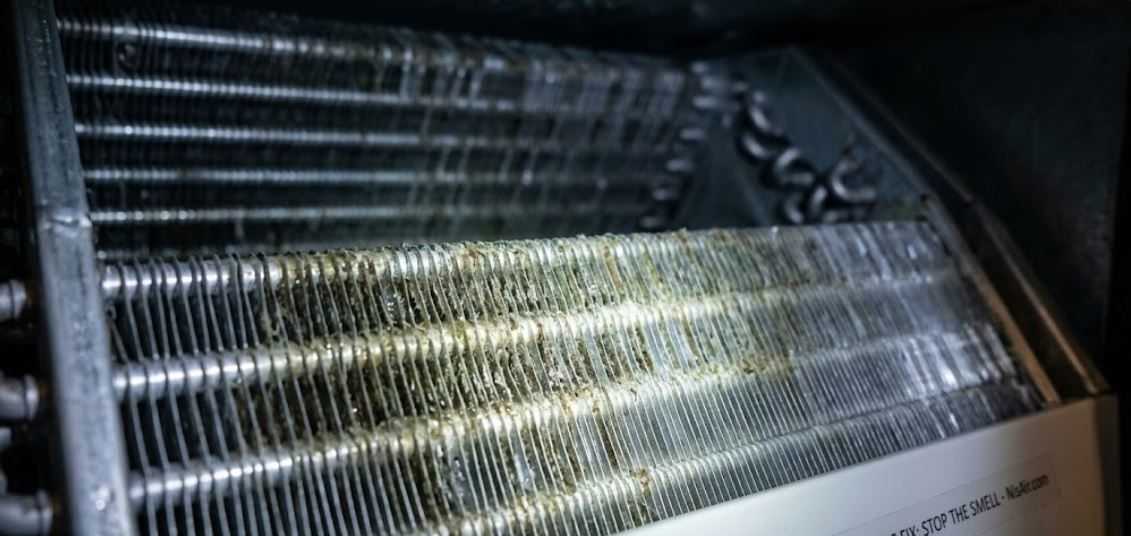
This process happens at the evaporator coil, which is located inside your air handler (the unit usually in your garage or closet).
The evaporator coil is designed to be extremely cold. When warm, humid Florida air is blown over these freezing-cold metal fins, the water in the air instantly condenses into liquid, much like a cold soda can "sweats" on a hot day. This water is supposed to drip down the fins, collect in a "drain pan," and flow out of your house via the "condensate line."
The perfect storm: When you add Florida's 90% outdoor humidity to the dark, enclosed, and cool environment inside your air handler, you create an ideal ecosystem for three specific things to thrive:
- Water: Constantly present from condensation.
- Darkness: Perfect for bio-growth.
- Food: Microscopic dust, skin cells, pet dander, and pollen that inevitably slip past even a good air filter.
Enter: The Bacteria Buffet
The "Dirty Sock Smell" is not actually the smell of mildew. It is the odor of microbial volatile organic compounds (mVOCs) released by heterotrophic bacteria. These bacteria (specifically strains like Pseudomonas or Alcaligenes) colonize the surface of your cooling coils. They eat the organic dust/dander caught on the wet fins and, through metabolic processes, "off-gas" the distinct volatile chemicals that we perceive as the stench of old, sweaty cotton.
The 3 Steps to Kill the Smell (The NisAir Fix)
Once you have the biological colony established on your coils, simply running the fan or turning the AC down won't work. The bacteria are sticky, they form a "biofilm" that protects them, and they require a specific approach to neutralize.
Step 1: The Mechanical Cleaning (Immediate Relief)
This is not a typical maintenance task. Your coils must be physically and chemically cleaned by a licensed professional. This involves using a specific, non-acidic "coil cleaner" foam.
- The Process: A NisAir technician must access the inner air handler cabinet, apply the specialized foam directly to the delicate evaporator fins, and let it react. This foam aggressively dissolves the sticky biofilm, breaks the bond between the bacteria and the metal, and allows the bacteria, dust, and grime to be liquefied and safely flushed down the condensate drain.
- The Result: Immediate removal of the source of the smell and restored airflow.
Step 2: The Preventive "Kill" (The Long-Term Solution)
Cleaning the coil provides instant relief, but if the water and darkness return, so will the bacteria (it can happen in as little as 30 days). To truly fix Dirty Sock Syndrome, you must introduce a preventive, biocidal element.
NisAir highly recommends installing a Germicidal UV-C Light System.
- How it Works: These lights are installed inside the air handler cabinet, directly above or facing the evaporator coil and drain pan. They operate constantly, bathing the entire coil surface in precise, high-intensity Ultraviolet-C (UV-C) light.
- The Technology: UV-C light is fatal to microscopic organisms. It penetrates their cellular structure and alters their DNA/RNA, making it impossible for them to reproduce, grow, or survive on the coil. If they can’t colonize the coil, they can't produce the smell.
- The Bonus: UV lights also kill mold spores, viruses, and other airborne pathogens, significantly improving your overall indoor air quality.
Step 3: Keep the Food Source Clean (Your Responsibility)
Your UV light can kill bacteria, but it cannot "eat" the dust that accumulates on your coils. If your coil gets covered in dust, the bacteria have a new "buffet table" that is protected from the UV light.
You must be vigilant about your air filter.
- The Rule: A standard 1-inch pleated filter must be checked monthly and replaced at least every 90 days. If you have multiple pets or suffer from severe allergies, you must change it more often (even monthly).
- The Upgrade: Consider upgrading to a higher MERV (Minimum Efficiency Reporting Value) filter. A filter with a MERV rating of 8–11 provides significantly better filtration of dander and pollen than standard "throwaway" fiberglass filters, keeping your coils cleaner, longer.
A Critical Note on "Coil Coatings"
Some sources may recommend applying a specialized anti-microbial "epoxy coating" to the coil. While this can be a solution in industrial settings, Total Air cautions against this for standard residential applications.
- These coatings can sometimes reduce the heat transfer efficiency of your coil (meaning your AC must work harder to cool).
- They can break down over time due to the corrosive effects of the coastal Florida salt air, potentially creating new problems.
The preferred approach for most Treasure Coast homes is a deep clean followed by a robust UV light system.
You do not have to live with a home that smells like a dirty gym bag. Dirty Sock Syndrome is a problem of biology and geometry, and with a targeted cleaning, the correct indoor air quality technology, and regular filter maintenance, you can reclaim your comfortable, clean-smelling Florida sanctuary. Don’t let the bacteria win—call a professional and fix that smell once and for all.