How Sealing Your Attic Saves You Money On Your Electric Bill
The attic – often an overlooked and underappreciated space in many homes – plays a far more significant role in your home's energy efficiency than you might realize. While it might seem like just a dusty storage area, a properly sealed attic can be a powerful ally in the fight against high electric bills. Understanding the science behind heat transfer and how your attic contributes to it is the first step in unlocking substantial savings.
At its core, a home's energy consumption is heavily influenced by how effectively it can maintain a consistent internal temperature, regardless of the conditions outside. This is where your HVAC (heating, ventilation, and air conditioning) system comes into play. During hot summer months, your air conditioner works tirelessly to cool your living spaces, while in winter, your furnace battles to keep them warm. The more resistance your home offers to the transfer of heat – both into and out of the conditioned space – the less your HVAC system has to work, and consequently, the less electricity it consumes.
One of the primary culprits in energy waste is uncontrolled air leakage, and the attic is often a major hotspot for this phenomenon. Think of your home as a giant chimney. Warm air naturally rises. In winter, the warm air generated by your furnace attempts to escape through any cracks and openings in your ceiling and into the attic. This creates a vacuum effect, drawing colder outside air in through lower parts of your home, such as around windows, doors, and foundation cracks. This continuous cycle of warm air escaping and cold air infiltrating is known as the "stack effect," and it forces your heating system to run longer and harder to compensate for the lost heat.
Conversely, in the summer, the attic can become an incredibly hot environment, with temperatures often soaring well above 120 degrees Fahrenheit. This superheated air then radiates downwards into your living spaces, making your air conditioner work overtime to combat the heat gain. Even with adequate insulation, if your attic isn't properly sealed, this scorching air can seep into your home through unsealed gaps and penetrations, diminishing the effectiveness of your cooling efforts.
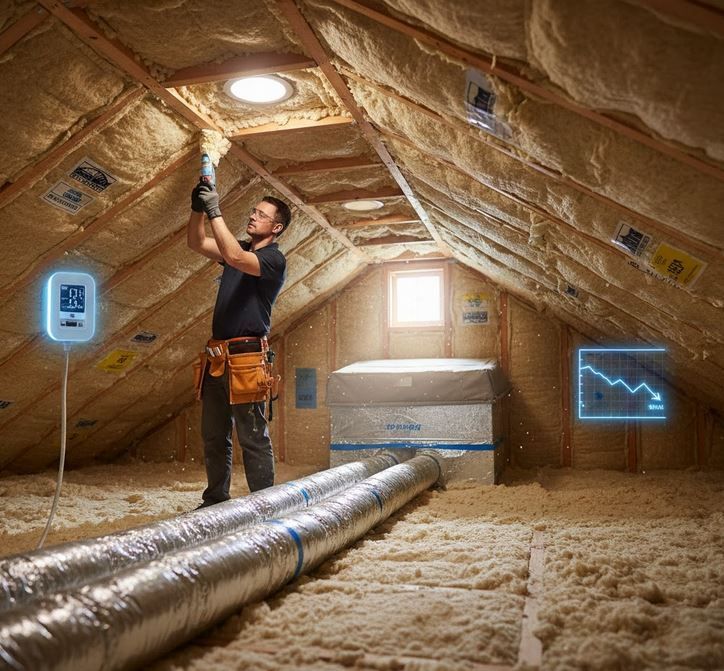
This is where attic sealing comes into its own. Sealing your attic involves identifying and closing off all the gaps, cracks, and openings that allow air to flow between your conditioned living space and the unconditioned attic. These common culprits include:
- Top plates: The wooden frames on top of interior walls that connect to the ceiling.
- Recessed light fixtures: Gaps around these fixtures are notorious for air leakage.
- Plumbing stacks and electrical wiring penetrations: Holes where pipes and wires pass through the ceiling.
- Chimneys and flues: Gaps around these heat sources can be significant.
- Attic access hatches/pull-down stairs: These often have large gaps that allow substantial air transfer.
- Ductwork: Leaky ducts running through the attic can lose a significant amount of conditioned air before it even reaches your rooms.
The process of sealing these areas typically involves using a combination of materials. Expanding foam sealants are excellent for filling larger gaps and irregularly shaped openings. Caulk is ideal for smaller cracks and seams. For larger openings, rigid foam boards cut to size and sealed with foam or tape can be effective. Sealing around attic access points often requires weatherstripping and a well-insulated cover to prevent air leakage.
The impact of proper attic sealing on your electric bill can be profound. By creating a more effective air barrier between your living space and the attic, you significantly reduce the amount of heat transfer occurring. In winter, less warm air escapes, and less cold air infiltrates, meaning your furnace doesn't have to work as hard to maintain a comfortable temperature. In summer, the superheated attic air is prevented from radiating and seeping into your home, allowing your air conditioner to cool more efficiently and run for shorter periods.
Consider the analogy of a leaky bucket. No matter how much water you pour into a leaky bucket, it will never stay full. Similarly, no matter how much insulation you have in your attic, if there are significant air leaks, you're constantly losing conditioned air and fighting an uphill battle against heat transfer. Sealing the attic is like plugging those holes in the bucket, allowing your insulation to perform at its maximum potential.
Beyond the immediate financial savings, there are several other benefits to sealing your attic. Improved indoor air quality is a significant one. By preventing unconditioned, dusty, and potentially allergen-laden air from entering your living spaces, you create a healthier environment for your family. Reduced drafts contribute to greater comfort, eliminating those annoying cold spots in winter and stuffy areas in summer. Furthermore, a well-sealed attic can help protect your home from moisture issues, which can lead to mold and mildew growth.
While the initial investment in attic sealing might seem daunting, it is a project with an excellent return on investment. Many homeowners report significant reductions in their electric bills, often seeing a payback period of just a few years. The exact savings will vary depending on factors such as your climate, the size of your home, your existing insulation levels, and the extent of air leakage. However, energy audits consistently show that air sealing is one of the most cost-effective energy efficiency upgrades you can make.
If you're considering tackling this project yourself, there are many resources available for guidance. However, for best results, especially if you have significant air leakage or complex attic configurations, consulting with a qualified energy auditor or an insulation professional is highly recommended. They can perform a blower door test to pinpoint exact air leakage locations and recommend the most effective sealing strategies.
In conclusion, the attic is far more than just storage; it's a critical component of your home's energy envelope. By understanding the principles of heat transfer and proactively sealing your attic, you can dramatically reduce air leakage, improve the effectiveness of your insulation, and ultimately save a substantial amount of money on your electric bill. It's an investment that pays dividends in comfort, energy savings, and a healthier home environment for years to come.