
Gas vs Electric Heater – Pros and Cons (Which Is Best for Your Home?)
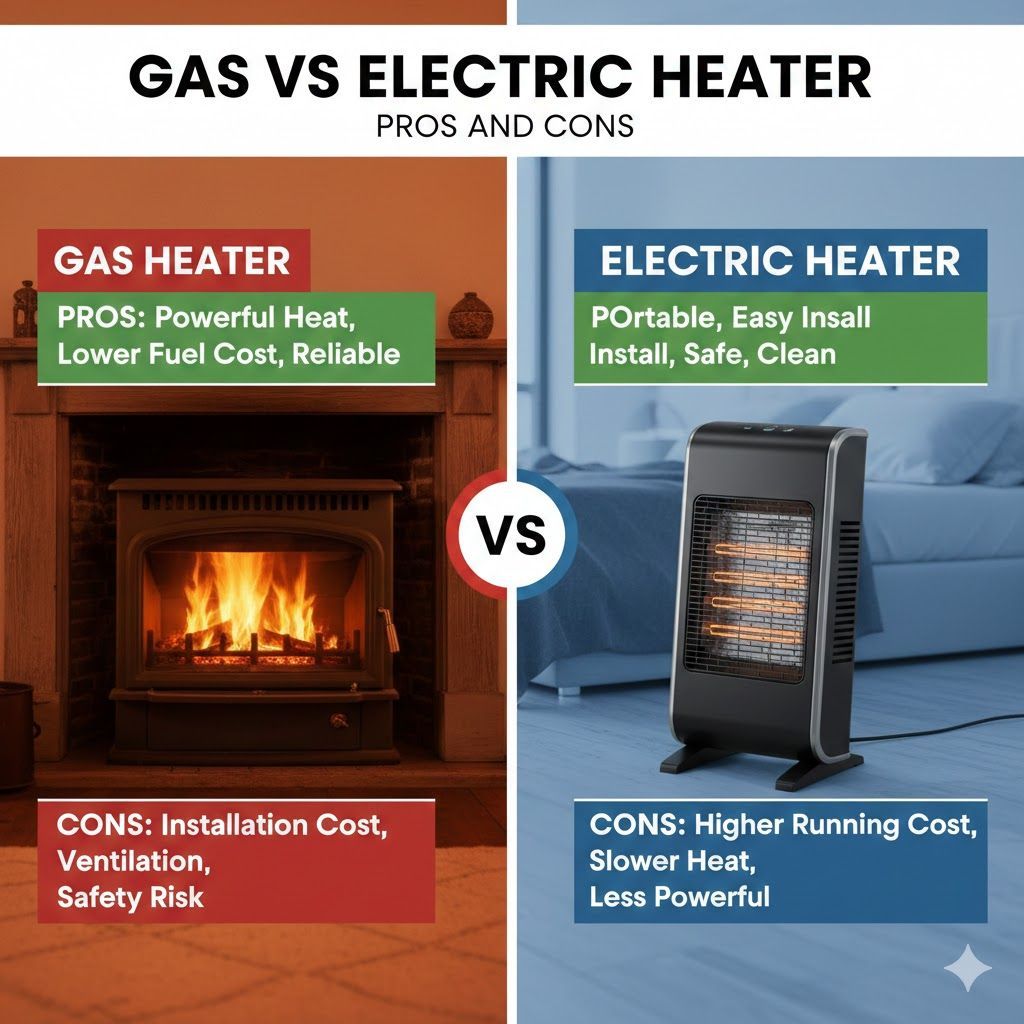
Choosing between a gas vs electric heater is one of the most important heating decisions a homeowner can make, affecting comfort, safety, and long‑term energy costs. This guide breaks down how each option works, their pros and cons, and key factors to help you decide which heater makes the most sense for your home and budget.
How gas and electric heaters work
Gas heaters burn natural gas or propane to create heat, which is then distributed through air or water systems. Because they rely on combustion, they need gas lines, proper venting, and safety controls to handle exhaust gases.
Electric heaters convert electrical energy directly into heat using resistance elements or heat pump technology, with no on‑site combustion or flue gases. These systems are simpler mechanically and can often be installed wherever there is an electrical supply.
Including this functional overview in the introduction section helps search engines understand the topic depth and supports intent for “how gas vs electric heating works.”
Pros and cons of gas heaters
Gas heaters are often preferred in colder climates and larger homes because of their strong heat output and lower operating costs where gas is inexpensive. However, they do come with higher installation complexity and safety considerations due to combustion and venting requirements.
Pros of gas heaters
Fast, powerful heat output: Gas heaters typically warm spaces faster than electric units and recover more quickly during very cold weather.
Lower operating cost (in many regions): In areas where natural gas is cheaper than electricity, gas heating often costs less to run over the season.
Reliable during power outages: Many gas heaters can continue to provide heat even when the electrical grid goes down, depending on the ignition and fan setup.
Better for very cold climates: Gas systems generally maintain performance better in freezing conditions than some electric systems, especially air‑source heat pumps.
Cons of gas heaters
Higher upfront installation cost: Gas heaters usually require gas lines, venting, and more complex setup, which increases initial installation costs.
Safety risks from combustion: Because they burn fuel, gas heaters carry risks of gas leaks and carbon monoxide if not installed and maintained correctly.
Maintenance requirements: Gas systems typically need regular inspections, cleaning, and safety checks to keep them efficient and safe.
Direct emissions: Gas heating produces on‑site carbon emissions, which may be a concern for homeowners focused on reducing their environmental footprint.
Pros and cons of electric heaters
Electric heating is known for its simplicity, high point‑of‑use efficiency, and safer, cleaner operation inside the home. The main trade‑off is usually higher monthly energy bills in regions where electricity is significantly more expensive than natural gas.
Pros of electric heaters
Simple installation and lower upfront cost: Electric heaters usually do not need gas lines or flues, so installation is often quicker and less expensive.
High efficiency at the unit: Nearly all of the electricity used by resistance electric heaters is converted directly into heat at the point of use.
Improved safety profile: With no fuel burning, there is no risk of gas leaks or carbon monoxide from the heater itself.
Low maintenance: Electric systems have fewer moving parts and no combustion components, so they generally require less routine servicing.
Potentially cleaner with renewables: When powered by solar, wind, or other renewable energy sources, electric heating can have a much lower overall carbon impact.
Cons of electric heaters
Higher operating cost in many areas: Where electricity rates are high, running an electric heater can cost more per unit of heat than a comparable gas system.
Slower heating and lower capacity for large spaces: Standard electric heaters often heat more gradually and may struggle to warm large or poorly insulated homes as effectively as gas.
Fully dependent on grid power: Electric heaters stop working during power outages unless backed by batteries or generators, which can be a concern in storm‑prone regions.
Gas vs electric heater: key comparison
Use this table in your blog to help readers quickly compare gas vs electric heaters across the factors they care about most, such as cost, efficiency, safety, and environmental impact.
How to choose: gas vs electric heater for your home
Search intent for “gas vs electric heater which is better” is usually decision‑focused, so closing the article with a clear decision framework improves both UX and SEO. Instead of declaring a universal winner, guide readers to match the heater type to their climate, budget, and safety or sustainability goals.
Consider these guidelines:
Choose gas heating if you live in a cold climate, have access to affordable natural gas, and need strong, fast heat for a larger home or prolonged winter seasons.
Choose electric heating if you want lower installation complexity, prefer a safer, low‑maintenance system, live in a mild climate, or plan to power your home with renewable energy.
Hybrid or phased approaches can work well, such as using efficient electric heating in mild areas of the home and gas systems for the main living spaces.