AC Repair VS AC Replacement Checklist
AC Repair vs. AC Replacement is one of the biggest decisions homeowners face when their system starts acting up, and having a clear checklist makes that choice much easier. This guide breaks down when AC Repair makes sense, when replacement is smarter, and how to use a simple checklist to decide.
Understanding Your AC System
A central air conditioner will typically last around 10–15 years, depending on usage, maintenance, and local climate. As it ages, efficiency drops, repairs become more frequent, and you eventually reach a tipping point where replacement beats repeated AC repair.
Key baseline facts:
Many manufacturers consider 10–15 years a normal lifespan for a central AC.
Older systems tend to lose efficiency and drive up energy bills over time, even if AC repair keeps them running.
When AC Repair Is the Right Move
In many situations, AC repair is the fastest and most cost-effective way to restore comfort without a major investment. If the unit is relatively new and the issue is minor, repairing it typically makes more sense than replacing the whole system.
You are a good candidate for AC repair if:
The system is under about 8–10 years old and has been maintained regularly.
The problem is minor or isolated (dirty filter, clogged drain line, small electrical issue, worn capacitor, thermostat problem, etc.).
The repair cost is well below half the price of a new system.
Your energy bills and comfort level have been normal up to this point.
Common issues typically solved by AC repair:
Warm or weak airflow due to clogged filters or minor component failures.
Strange noises from loose parts, fan issues, or failing capacitors.
Musty odors from dirty coils, drain issues, or microbial growth inside the unit.
Water leaks from clogged condensate lines or damaged drain pans.
When these issues are caught early, AC repair can restore performance and extend system life without major expense.
When AC Replacement Makes More Sense
At some point, the cost and hassle of constant AC repair outweigh the benefits of keeping an older system going. Newer systems usually offer higher efficiency, better comfort, and improved reliability, which can pay off over the long run.
Strong signs you should lean toward AC replacement:
The unit is roughly 10–15 years old or older and showing its age.
You are facing frequent AC repair visits more than once a year or recurring breakdowns.
Repair estimates are high, especially for major parts like the compressor or coil.
Energy bills have been climbing without a major change in usage or utility rates.
The system struggles to keep the home comfortable or cools unevenly from room to room.
Many HVAC experts recommend simple rules of thumb:
If the AC is near or past its expected life and repair costs reach 50% or more of a new unit, replacement is often smarter.
Some contractors suggest considering replacement if a single repair costs around 30–40% of a new system and the unit is older with more issues on the horizon.
Benefits of choosing replacement:
Higher efficiency ratings that can significantly reduce monthly cooling costs.
More consistent temperature and better humidity control throughout the home.
Quieter operation and modern features like smart thermostats or variable-speed technology.
New warranty coverage that protects you from surprise repair bills for years.
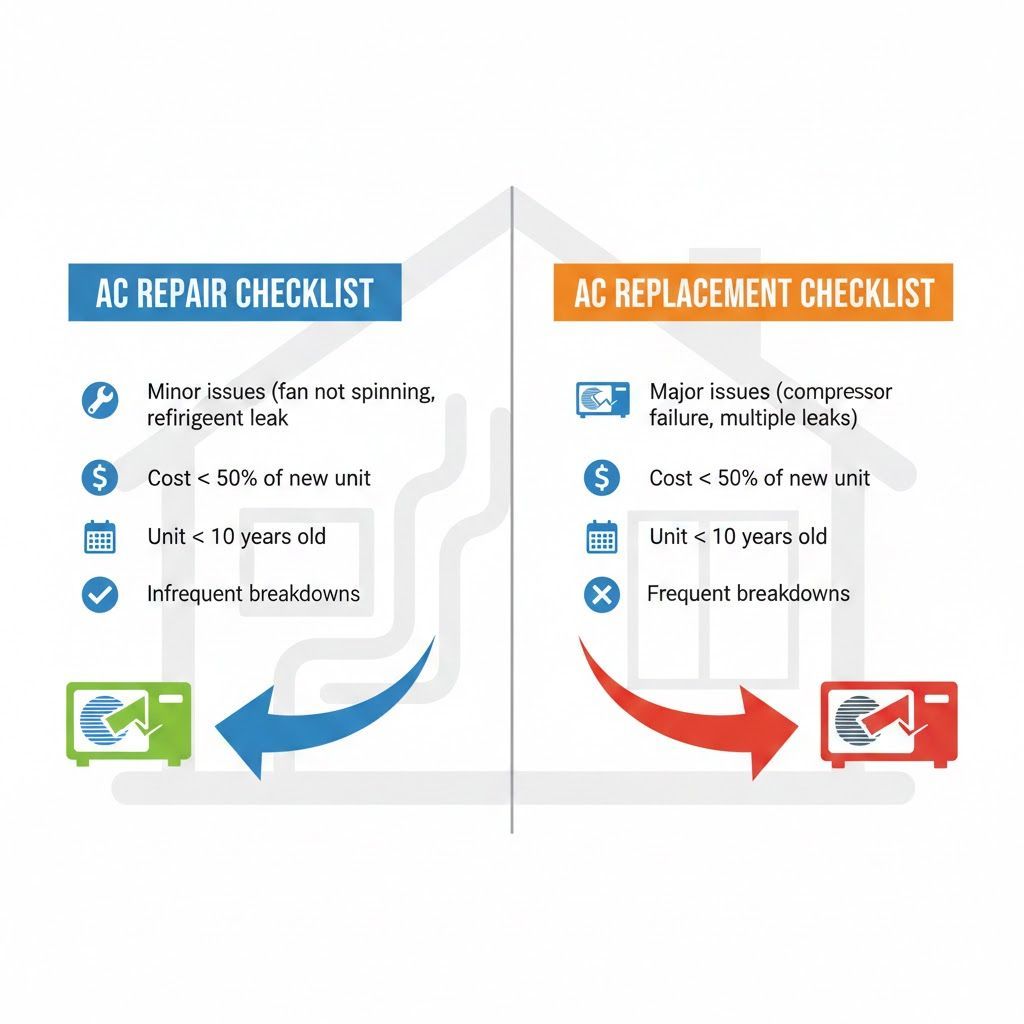
The AC Repair vs. Replacement Checklist
Use this simple checklist when deciding between AC repair and replacement. Go line by line and be honest about what applies to your system.
1. System age
Under 8–10 years old → Favor AC repair unless the problem is severe or recurring.
Around 10–15+ years old → Strongly consider replacement, especially if other issues on this checklist apply.
2. Repair cost vs. replacement cost
Does the repair estimate reach 30–40% of a new system’s cost? If yes, replacement may be the smarter long-term investment.
Does it approach or exceed 50% of a new unit? That is often a clear replacement signal for older systems.
3. Frequency of AC repair
One minor repair in several years of operation usually points toward repair and continued use.
Multiple AC repair visits in one or two seasons suggest the system is failing and replacement could be more economical.
4. Energy bills and efficiency
Have your cooling bills climbed steadily without rate increases or unusual weather?
Yes → The AC may be losing efficiency, favoring replacement.
No → Efficient performance supports choosing AC repair for isolated issues.
5. Comfort and performance
Does the system maintain set temperatures and manage humidity well? If comfort is still good, AC repair usually makes sense for isolated faults.
Hot and cold spots, high humidity, or weak airflow even after AC repair attempts may indicate the unit is undersized, failing, or poorly matched to the home, which favors replacement.
6. Type of problem
Minor problems: dirty filters, clogged drains, simple electrical issues, thermostat malfunctions, or single worn components are ideal candidates for AC repair.
Major problems: compressor failure, coil leaks, severe electrical damage, or repeated refrigerant issues on an older system push toward replacement.
7. Warranty status
If the system or key components are still under warranty, AC repair may be very affordable and is usually the best first option.
If warranties have expired and the system is aging, every major AC repair comes entirely out of pocket and adds weight to the replacement side of the equation.
8. Future plans and budget
Planning to stay in the home for many years? Investing in a new high-efficiency system can deliver long-term savings and comfort.
Planning to move soon or working within a tight budget? A carefully chosen AC repair may help you get a few more comfortable seasons without a large upfront cost.
How to Talk to Your HVAC Technician
Even with a solid AC repair vs. replacement checklist, it helps to ask the right questions during your service visit. A reputable contractor should be willing to walk you through options in clear, non-technical language.
Questions to ask:
What caused the problem, and is it likely to come back after AC repair?
How much useful life do you think this system has left if I repair it now?
How much would a comparable new system cost installed, and what efficiency gains could I expect compared to keeping this unit with AC repair?
Are there any rebates, tax credits, or financing options available that could offset the cost of replacement?
A trustworthy technician will compare short-term AC repair expenses with long-term operating costs and help you choose the option that fits your comfort, budget, and plans for the home.
Final takeaway
Use this checklist to weigh system age, repair cost, frequency of AC repair, energy bills, comfort, and warranty status before making a decision. In many cases, a well-timed AC repair is all you need, but when the signs of age, cost, and inefficiency stack up, AC replacement can deliver better comfort and lower costs over the long run.