How Hidden HVAC Costs Are Quietly Draining Your Business
We have all witnessed or participated in the silent, passive-aggressive thermostat wars. One employee sneaks over to turn the dial up to 74°F while wearing a heavy sweater. Twenty minutes later, another employee—practically sweating in a t-shirt—storms over to crank it down to 68°F.
While this might seem like a humorous quirk of modern office life, the reality is far more serious. The climate inside your commercial space is directly tied to your bottom line. Temperature, humidity, and indoor air quality (IAQ) act as invisible levers controlling employee productivity, equipment longevity, and utility expenses.
If your facility's heating, ventilation, and air conditioning system isn't running optimally, you are bleeding money in ways you probably haven’t even considered yet. Here is a deep dive into how hidden HVAC issues quietly drain your business—and what you can do to reclaim those lost profits.
The Invisible Thief: Temperature and the Productivity Drain
It is easy to look at a commercial utility bill and focus purely on the dollar amount. What business owners often fail to calculate, however, is the cost of lost human potential.
When an office is too hot or too cold, the human brain shifts its resources. Instead of focusing entirely on writing code, balancing accounts, or closing sales, the body spends energy trying to regulate its core temperature.
Consider a famous study conducted by researchers at Cornell University. They tracked office workers at a major insurance company and found some startling correlations:
- At 68°F (20°C): Employees keyed in data with a 74% accuracy rate and a relatively high error rate.
- At 77°F (25°C): Typing errors fell by 44%, and output volume increased by 150%.
When workers are physically uncomfortable, they make mistakes. They take more frequent breaks to grab warm drinks, step outside for "fresh air," or simply huddle around space heaters. If you employ 50 people, and each person loses just 15 minutes of focus per day to thermal discomfort, that equates to over 3,000 lost hours of productivity every single year.
Sick Building Syndrome: The High Cost of Bad Air
If you have ever noticed an unusual spike in employee absenteeism during the transition from fall to winter, or winter to spring, you might not be dealing with the flu. You could be dealing with Sick Building Syndrome (SBS).
This is a condition where building occupants experience acute health and comfort effects that seem directly linked to time spent in a building, though no specific illness or cause can be identified. The symptoms include:
- Chronic headaches
- Dry, itchy eyes and throat irritation
- Persistent fatigue and mental fog
- Unexplained sneezing or coughing
The culprit is almost always poor Indoor Air Quality (IAQ) caused by inadequate ventilation or neglected filtration. Modern commercial buildings are engineered to be highly airtight to maximize energy efficiency. While this keeps conditioned air from escaping, it also traps indoor pollutants.
Without proper air exchange, carbon dioxide (CO2) levels climb. When CO2 concentrations exceed 1,000 parts per million (ppm), cognitive function declines significantly. Your team isn't just tired; they are literally breathing in stale, recycled air that impairs their ability to make complex decisions. Furthermore, dirty filters and damp ductwork become breeding grounds for mold and bacteria, circulating allergens across entire floors and driving up sick leave.
The Energy Bill Shock: Wasted Kilowatts and Carbon Footprints
HVAC systems are easily the largest energy consumers in any commercial building, often accounting for 40% to 50% of a facility’s total energy usage.
When a commercial system is neglected, it doesn't just stop working overnight. Instead, it slowly degrades, consuming more and more power to achieve the same temperature targets. A light layer of dust on an evaporator coil can reduce its heat transfer efficiency by up to 21%. To compensate, the compressor must run longer and hotter, pulling massive amounts of extra electricity from the grid.
Additionally, leaking ductwork can lose up to 30% of conditioned air before it ever reaches the registers in your offices or retail spaces. You are quite literally paying to heat or cool the dead space inside your walls and ceilings.
Why Commercial HVAC is a Completely Different Beast
Many business owners treat commercial HVAC like a scaled-up version of residential heating and cooling. This is a costly mistake. The design, load requirements, and mechanics of commercial systems are incredibly complex.
Complex Zoning and Variable Loads
Unlike a home, which usually has relatively uniform heating and cooling needs, a commercial building has wildly variable load demands. A conference room packed with 30 people generates an immense amount of body heat and CO2, requiring rapid cooling and fresh air intake. Meanwhile, an empty corner office down the hall on the shady side of the building might simultaneously require heating. Commercial systems rely on sophisticated zoning dampers, Variable Air Volume (VAV) boxes, and smart thermostats to balance these competing demands in real time.
Rooftop Units (RTUs) and Weather Exposure
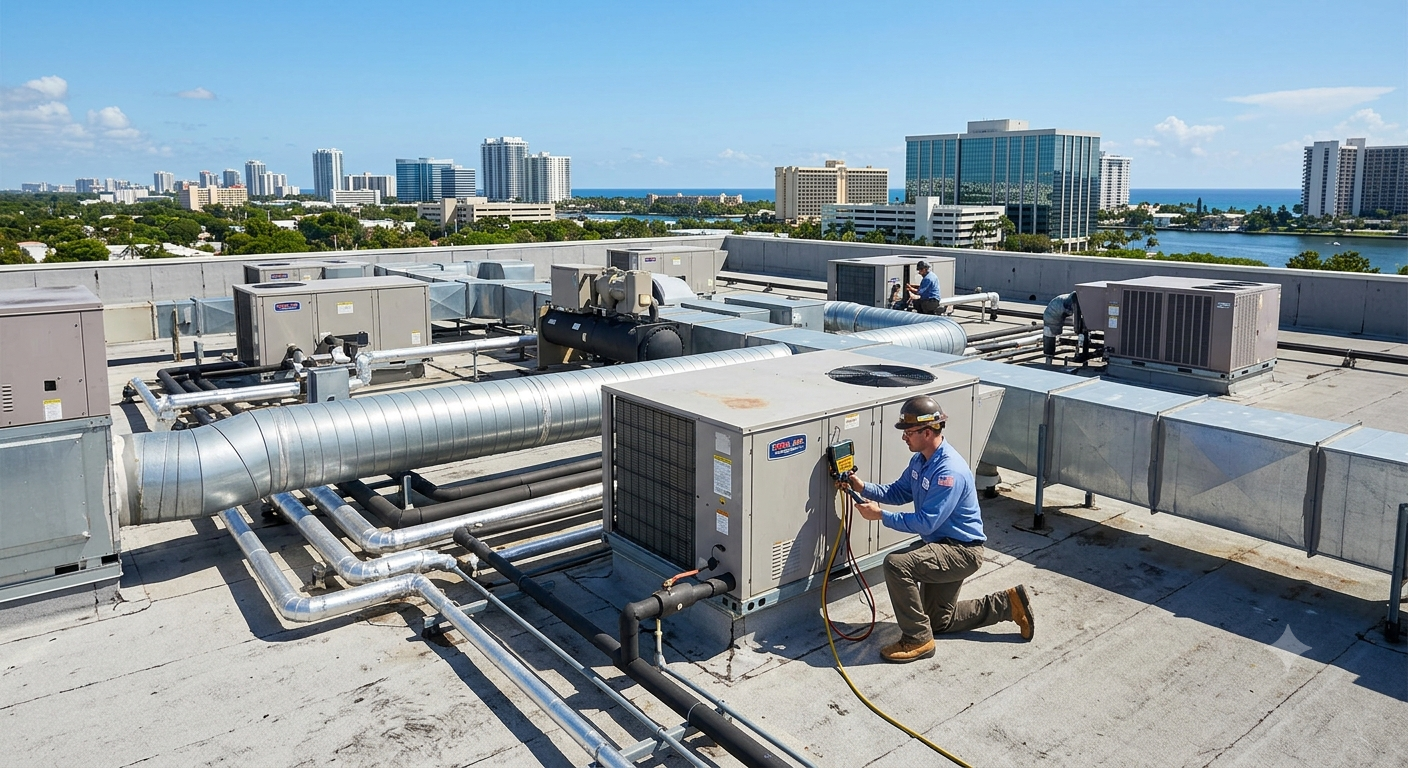
Most commercial systems are packaged rooftop units. They house the compressor, condenser, evaporator, and fan in a single all-weather footprint. Because they are completely exposed to the elements—from scorching summer sun to freezing winter storms—they experience rapid wear and tear. A minor casing leak can allow rainwater to bypass filtration, ruining internal electronics and creating mold hazards within the supply airstream.
Breaking the Run-to-Failure Cycle
Too many businesses operate on a "run-to-failure" model. They wait until the system stops blowing cold air on a 95°F July afternoon before they call a technician.
This reactive approach is the most expensive way to run a business. Not only do you face premium emergency service rates, but you also risk a complete business shutdown. If your retail storefront, restaurant, or server room loses climate control, you lose customers, spoil inventory, and risk hardware damage.
Transitioning to a preventative maintenance strategy is the ultimate shield against these invisible losses. Regularly scheduled maintenance ensures:
- Prolonged Equipment Lifespan: A well-maintained commercial system can easily last 15 to 20 years, whereas a neglected system may require a costly capital replacement in as little as 8 to 10 years.
- Predictable Operational Costs: Clean coils, calibrated thermostats, and lubricated bearings keep your energy bills flat and highly predictable.
- Optimized Comfort and Safety: Regular checks of carbon monoxide levels, heat exchangers, and ventilation dampers keep your air clean and your team healthy.
Take Control of Your Indoor Environment
Your commercial building is an active engine for your business's success. Every element of its infrastructure should support your team, protect your assets, and preserve your capital.
If you suspect your system is underperforming, your energy bills are creeping upward, or your team is constantly complaining about drafty rooms and stale air, it is time to bring in the specialists. Partnering with a licensed expert for comprehensive commercial HVAC services is the fastest way to audit your current system, seal energy leaks, and design a custom maintenance schedule that fits your operational budget.
Do not let invisible HVAC inefficiencies quietly drain your hard-earned profits. Investing in your building’s climate control today pays immediate dividends in employee health, lower energy bills, and long-term peace of mind.