Commercial HVAC Repair: Essential Guide for Businesses
When running a business, few things disrupt operations as fast as a failing heating, ventilation, and air conditioning (HVAC) system. Whether you manage a retail store, a sprawling office complex, a medical facility, or an industrial warehouse, climate control is not a luxury—it is a core operational requirement. A sudden breakdown during a hot summer afternoon or a freezing winter morning affects employee productivity, drives away customers, and risks damaging heat-sensitive equipment or inventory.
Understanding how your commercial heating and cooling equipment functions, recognizing early warning signs of failure, and knowing when to call for professional intervention can save your business thousands of dollars in emergency repairs and premature replacements.
The True Cost of Neglecting Commercial Heating and Cooling
Commercial HVAC systems are complex, heavy-duty mechanical installations designed to run continuously under demanding conditions. Unlike residential units, which typically heat or cool isolated living spaces, commercial units handle high occupant density, large square footage, and continuous airflow requirements mandated by building codes.
When maintenance is deferred or small performance drops are ignored, the financial ripple effect spreads quickly across your business:
- Escalating Utility Bills: A struggling compressor, clogged air filters, or leaking ductwork forces your system to draw significantly more power to meet target temperatures. Energy efficiency can drop by 15% to 30% before a major failure occurs.
- Loss of Revenue and Foot Traffic: In retail or hospitality settings, uncomfortable indoor temperatures immediately reduce customer dwell time and sales conversions.
- Reduced Workforce Productivity: Studies consistently show that indoor environment quality directly impacts employee focus and performance. Temperatures above or below optimal comfort ranges lead to fatigue and lower daily output.
- Premature Equipment Replacement: Minor mechanical friction, unaddressed refrigerant leaks, or dirty coils put excessive strain on major components like compressors and blower motors, drastically cutting down the equipment's lifespan.
5 Warning Signs Your Commercial HVAC Needs Immediate Repair
Catching mechanical issues early is the key to preventing catastrophic system breakdowns. Facilities managers and business owners should stay alert for these five clear indicators:
1. Unusual Noise or Excessive Vibration
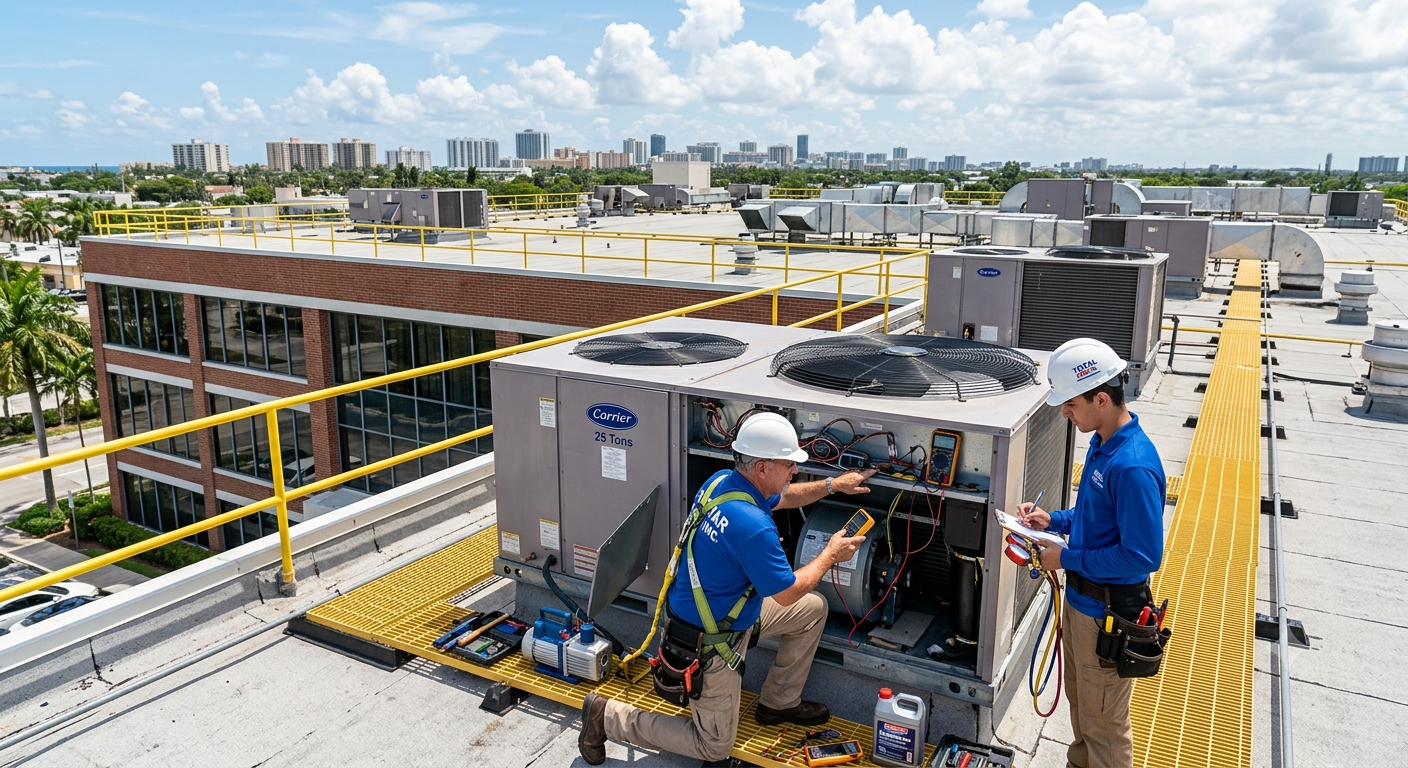
While large packaged rooftop units (RTUs) and chillers produce operational noise, sudden grinding, squealing, banging, or persistent buzzing indicates severe internal wear. Rattling often points to loose fan blades or failing motor bearings, while loud buzzing can signal electrical contactor failure.
2. Uneven Airflow and Temperature Zonation Issues
If certain offices feel like iceboxes while adjacent conference rooms remain warm and humid, your system is failing to regulate airflow properly. This problem typically stems from faulty zone dampers, clogged air ducts, malfunctioning thermostats, or failing blower fans.
3. Unexpected Spikes in Energy Bills
If your utility bill surges without a corresponding increase in operational hours or extreme weather changes, your equipment is working harder than it should. Decreased operating efficiency is often the first silent warning of internal component degradation.
4. Poor Indoor Air Quality and Excessive Humidity
Commercial HVAC units are responsible for moisture removal as well as temperature control. High indoor humidity, muggy air, persistent stale odors, or visible dust accumulating around air vents indicate compromised ventilation, dirty evaporator coils, or clogged drain lines.
5. Frequent Short-Cycling
When a commercial unit turns on and off rapidly without completing a full cooling or heating cycle, it is short-cycling. This behavior places immense electrical stress on the compressor and fan motors, usually caused by clogged filters, incorrect refrigerant charges, or failing system controls.
Key Components Inspected During Commercial Service Calls
To help facility managers understand what technicians evaluate during a diagnostic call, here are the main system components and their common failure points:
- Compressor: The heart of the system, circulating refrigerant under high pressure. Common failure points include overheating, valve wear, and electrical overloads.
- Evaporator & Condenser Coils: These heat exchangers transfer thermal energy between the indoor environment and outdoor air. They often fail due to dirt accumulation, corrosion, or pinhole refrigerant leaks.
- Blower Assembly & Motors: Responsible for circulating conditioned air through duct network branches. Issues usually stem from worn belts, dry bearings, or total motor burnout.
- Ductwork & Dampers: The channels and valves directing air to designated building zones. These suffer from loose duct connections, air leakage, or stuck mechanical dampers.
- Economizers: Systems designed to draw in outside air when outdoor conditions permit free cooling. Sensors can fail, or mechanical linkages and actuators can bind up.
Proactive Maintenance vs. Reactive Repair: Finding the Balance
While prompt repairs are necessary when components fail, a purely reactive approach—fixing things only after they break—is the most expensive way to manage commercial building infrastructure. Implementing a structured preventative maintenance schedule dramatically reduces long-term operational expenditures.
Preventative Maintenance Checklist
- Quarterly Filter Changes: High-MERV commercial filters should be inspected monthly and replaced quarterly to preserve airflow and protect fan motor health.
- Bi-Annual Coil Cleaning: Evaporator and condenser coils must be cleared of dirt, leaves, and atmospheric grime before peak summer and winter operational periods.
- Electrical System Tightening: Technicians should test voltage levels, check wire insulation, and tighten terminal connections to avoid electrical shorts.
- Refrigerant Level Verification: Ensuring precise refrigerant charge prevents compressor freezing and maintains optimal cooling capacity.
- Condensate Line Flushing: Clearing drain lines prevents water overflow that can cause structural ceiling and floor damage.
Selecting the Right Partner for Your Building's Needs
Commercial HVAC equipment differs significantly from residential systems in scale, engineering, and control complexity. When seeking professional assistance for your facility, choose a licensed contractor with proven expertise in commercial-grade chillers, boilers, packaged rooftop units, and variable refrigerant flow (VRF) systems.
Working with an experienced contractor ensures fast diagnostic turnarounds, minimal downtime for your staff, and access to commercial-grade replacement components. When your facility requires dependable diagnostic expertise, fast response times, and long-term climate solutions, turning to trusted specialists for commercial HVAC repair keeps your business comfortable, efficient, and fully operational year-round.
Investing in regular inspections, addressing minor system anomalies right away, and establishing a relationship with certified commercial technicians will protect your building infrastructure and keep your energy overhead manageable for years to come.