
How UV Lights Improve Indoor Air Quality
In an era where indoor air quality (IAQ) has become a paramount concern, homeowners and businesses alike are constantly seeking innovative solutions to create healthier living and working environments. Among the array of technologies available, UV lights (ultraviolet lights) have emerged as a highly effective and increasingly popular method for enhancing indoor air quality. Often associated with sterilization in medical settings, the application of UV lights in HVAC systems offers a powerful defense against a myriad of airborne contaminants, transforming the air we breathe indoors.
The average person spends a significant portion of their life indoors, making the quality of that indoor air critical to health and well-being. Indoor air can be two to five times, and occasionally more than 100 times, more polluted than outdoor air, according to the Environmental Protection Agency (EPA). This startling fact highlights the urgent need for effective IAQ solutions. Common indoor air pollutants include allergens like pollen and pet dander, volatile organic compounds (VOCs) from cleaning products and building materials, and perhaps most concerningly, biological contaminants such as mold, bacteria, and viruses. It is against these biological threats that UV lights prove particularly potent.
Understanding UV-C Technology
To appreciate how UV lights improve IAQ, it's essential to understand the science behind them. Ultraviolet (UV) light is a form of electromagnetic radiation with wavelengths shorter than visible light. The UV spectrum is divided into three main categories: UV-A, UV-B, and UV-C. While UV-A and UV-B are responsible for suntans and sunburns, it is UV-C light that possesses germicidal properties.
UV-C light, specifically in the 200-280 nanometer (nm) range, is highly effective at disrupting the DNA and RNA of microorganisms. When bacteria, viruses, mold spores, and other pathogens are exposed to UV-C radiation, their genetic material is damaged, rendering them unable to reproduce and effectively inactivating them. This germicidal action is a purely physical process, meaning it doesn't involve chemicals or produce harmful byproducts, making it an environmentally friendly and safe method for air purification when properly installed.
The Genesis of Germicidal UV in Air Purification
The concept of using UV light for sterilization isn't new. Its germicidal properties were discovered in the late 19th century, and UV-C lamps have been widely used for disinfection in hospitals, laboratories, and water treatment facilities for decades. The application of UV lights to improve indoor air quality specifically within HVAC systems gained traction as our understanding of airborne pathogen transmission evolved.
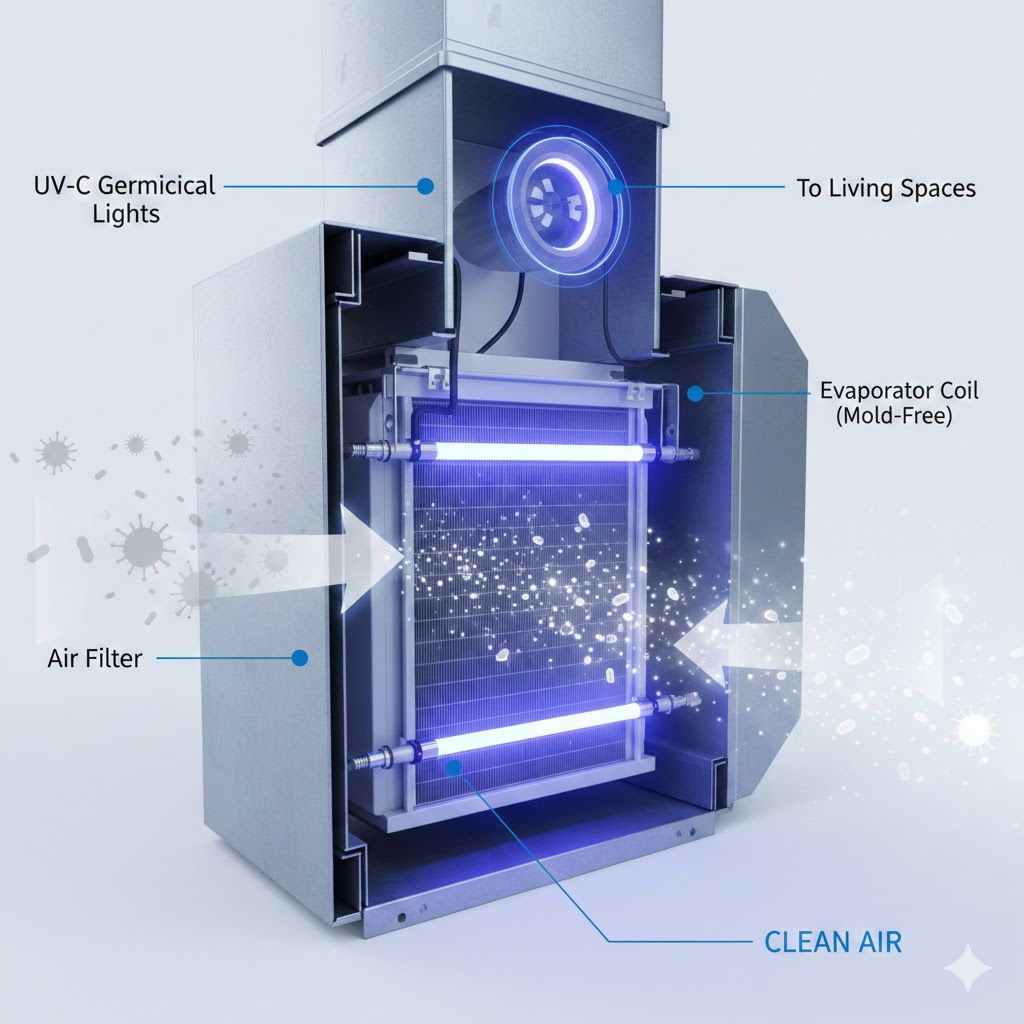
Early applications in HVAC focused primarily on coil sterilization. HVAC coils, especially the evaporator coil, are notorious breeding grounds for mold and bacteria due to the dark, damp conditions they provide. These microbial growths not only degrade air quality by releasing spores and volatile organic compounds but also reduce the efficiency of the HVAC system by impeding airflow and heat exchange. Installing UV lights directly across the coils effectively sterilizes these surfaces, preventing microbial growth at its source.
How UV Lights Integrate into HVAC Systems
There are primarily two ways UV lights are integrated into residential and commercial HVAC systems to improve IAQ:
Coil Sterilization UV Lights (Surface Purification): These are the most common type and are installed directly within the air handler, positioned to shine continuously on the evaporator coil and drain pan. Their primary function is to prevent the growth of mold, mildew, and bacteria on these wet surfaces. By keeping the coils clean, these UV lights not only prevent the release of harmful biological contaminants into the airstream but also help maintain the efficiency of the HVAC system, potentially leading to energy savings and reduced maintenance needs.
In-Duct Air Purification UV Lights (Air Stream Purification): These UV lights are installed in the return air duct, where they treat the air as it circulates through the HVAC system. As air passes over the UV-C lamp, airborne microorganisms are exposed to the germicidal radiation and inactivated. Some advanced in-duct systems also utilize a photocatalytic oxidation (PCO) process, where the UV light reacts with a titanium dioxide-coated filter to create hydroxyl radicals. These radicals are highly reactive and can break down VOCs and other gaseous pollutants in addition to inactivating biological contaminants.
The Benefits of UV Lights for Indoor Air Quality
The integration of UV lights into HVAC systems offers a multitude of benefits for improving indoor air quality:
Elimination of Biological Contaminants: This is the most significant advantage. UV lights effectively kill or inactivate viruses (including influenza, coronaviruses), bacteria, mold spores, and other pathogens that can cause respiratory issues, allergies, and illnesses. This is particularly crucial for individuals with compromised immune systems, allergies, or asthma.
Mold and Mildew Prevention: By continuously sterilizing the HVAC coils and drain pan, UV lights prevent the proliferation of mold and mildew, which are common allergens and irritants. This not only improves air quality but also eliminates the musty odors often associated with mold growth in HVAC systems.
Reduction of Odors: Beyond mold, UV lights, especially those combined with PCO technology, can break down volatile organic compounds (VOCs) that contribute to unpleasant indoor odors from sources like cooking, pets, cleaning products, and even new furnishings.
Improved HVAC System Efficiency and Longevity: Clean coils operate more efficiently. When coils are covered in mold and debris, the HVAC system has to work harder to achieve desired temperatures, leading to increased energy consumption and wear and tear on components. UV lights keep coils clean, restoring heat transfer efficiency, extending the lifespan of the system, and potentially lowering energy bills.
Chemical-Free Disinfection: Unlike some chemical air fresheners or purifiers, UV lights disinfect the air without introducing any additional chemicals or byproducts into the indoor environment. This makes them a safe option for households with sensitivities to chemicals.
Continuous Protection: Once installed, UV lights provide continuous, 24/7 protection against airborne and surface-borne microbial growth within the HVAC system, ensuring a constant supply of cleaner air.
Considerations for Installing UV Lights
While the benefits of UV lights are clear, there are a few considerations for homeowners and businesses contemplating their installation:
Professional Installation: While some DIY kits exist, professional installation is highly recommended to ensure proper placement, wiring, and safety. Direct exposure to UV-C light can be harmful to skin and eyes, so the lamps must be securely contained within the HVAC system.
Lamp Replacement: UV lights have a finite lifespan, typically one to two years, after which their germicidal effectiveness diminishes. Regular lamp replacement is necessary to maintain optimal performance.
System Compatibility: Most modern HVAC systems can accommodate UV lights, but it's always best to consult with an HVAC professional to ensure compatibility and the most effective placement for your specific system.
Not a Standalone Solution: While highly effective against biological contaminants, UV lights are best used as part of a comprehensive IAQ strategy. They do not remove particulate matter like dust, pollen, or pet dander, for which high-efficiency particulate air (HEPA) filters are still necessary. Combining good filtration with UV lights offers a powerful multi-layered defense.
The Future of Indoor Air Quality with UV Lights
As awareness of indoor air quality grows, and as new challenges like emerging pathogens continue to arise, the role of UV lights in creating healthier indoor environments will undoubtedly expand. Advancements in UV-C technology are leading to more compact, energy-efficient, and effective units, including those designed for specific applications beyond HVAC, such as portable air purifiers. The integration of smart technology may also allow for more precise control and monitoring of UV light systems, optimizing their performance based on real-time IAQ data.
In conclusion, for those seeking to significantly improve the quality of the air they breathe indoors, UV lights present a scientifically proven and highly effective solution. By actively combating mold, bacteria, and viruses within the HVAC system, they contribute to a healthier, cleaner, and more comfortable indoor environment. As a vital component of a holistic approach to indoor air quality, UV lights are not just a luxury but an increasingly essential tool for modern living.