
Ways To Check Indoor Air Quality
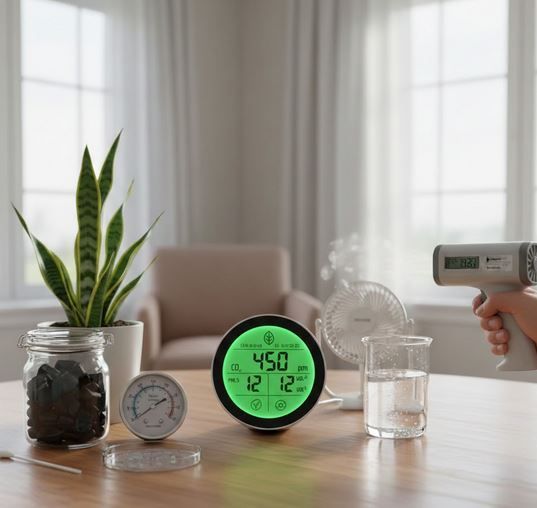
You can check indoor air quality with a mix of simple observations, affordable home tools, and professional testing, each targeting different pollutants and comfort factors.
Start with signs you can see and feel
Before you buy tools, look for everyday indicators that your indoor air might be compromised.
Frequent headaches, fatigue, allergy flare‑ups, or irritated eyes and throat indoors can signal poor air quality.
Visible dust buildup on surfaces and vents suggests high particulate levels or weak filtration.
Persistent odors (musty, chemical, or “stale” air) point to pollutants or poor ventilation.
Condensation on windows, damp spots, or mold on walls indicate humidity and moisture problems that affect IAQ.
Hot or stuffy rooms compared with outdoors often mean inadequate fresh‑air exchange or circulation.
These clues won’t give you numbers, but they tell you which issues to investigate first, such as ventilation, moisture, or specific contaminants.
Use indoor air quality monitors
A dedicated indoor air quality monitor is one of the easiest ways to get real‑time data on your home’s air.
Most consumer monitors track several key factors such as particulate matter (PM2.5), volatile organic compounds (VOCs), carbon dioxide (CO2), temperature, and humidity.
Newer devices can also detect gases like carbon monoxide (CO), nitrogen oxides, or even radon, depending on the model.
Many units connect to smartphone apps to show trends over hours and days, send alerts when levels spike, and help you correlate activities (like cooking or cleaning) with pollution.
By placing monitors in living areas and bedrooms, you can see whether particles from cooking, smoke, or outdoor pollution are creeping indoors, and whether CO2 builds up overnight from poor ventilation.
Try DIY home test kits
For specific pollutants, at‑home test kits give you targeted measurements over a set period.
Common DIY options include:
Mold test kits to check air or surfaces for mold growth in problem areas, often using petri dishes or swabs analyzed in a lab.
Radon test kits (short‑term or long‑term) that sit in a room for days to months, then go to a lab for analysis of average radon levels.
VOC and formaldehyde kits that sample air to detect off‑gassing from paints, furniture, and building materials.
Allergen test kits for dust mites, pet dander, and pollen, often by collecting dust and sending it to a lab.
These kits are useful when you suspect a particular issue—like mold in a basement or high formaldehyde after a renovation—and want lab‑backed confirmation.
Check ventilation, humidity, and HVAC
Air quality is closely tied to how well your space is ventilated and how your HVAC system runs.
Use a hygrometer or monitor to track indoor humidity; ideal levels are typically in the 30–50% range to limit mold and dust mites.
Inspect vents and returns to be sure they aren’t blocked by furniture or dust‑clogged grilles.
Change or upgrade HVAC filters regularly to reduce particulate levels; higher‑efficiency filters capture finer particles.
Look for signs of moisture or leaks around ducts, air handlers, and windows, which can lead to mold and poor IAQ.
Consider whether you have a source of fresh outdoor air or whether the home is sealed so tight that CO2 and pollutants build up.
An IAQ checklist that covers ventilation, HVAC condition, moisture, odors, and occupant health symptoms helps ensure you don’t miss a major factor.
Monitor safety gases: CO, CO₂, and radon
Some of the most important air quality threats are invisible and often odorless, so specific detectors are essential.
Carbon monoxide (CO): Install CO alarms near sleeping areas and fuel‑burning appliances; they warn of dangerous combustion gases from furnaces, stoves, or water heaters.
Carbon dioxide (CO₂): CO₂ monitors show how quickly fresh air dilutes exhaled air; consistently high levels suggest inadequate ventilation, which can cause drowsiness and poor concentration.
Radon: Long‑term radon testing in lower levels of the home is recommended in many regions, since radon exposure increases lung cancer risk.
These measurements give you a clearer picture of serious air quality risks that you cannot see, smell, or feel until health issues appear.
When to hire a professional assessment
If DIY tools show problems or you have persistent symptoms without clear answers, a professional indoor air quality assessment can go much deeper.
Specialists visually inspect the building, ventilation, and HVAC systems and look for moisture, damage, or contamination sources.
They use calibrated instruments to measure CO, CO₂, particulates, VOCs, humidity, and temperature under real conditions.
For complex problems, they may collect air and dust samples for lab analysis of mold, allergens, and chemical pollutants, and then provide a written report with recommendations.
Professional testing is especially worthwhile for businesses, schools, or homes with vulnerable occupants, or when you’re pursuing certifications or addressing legal or health complaints.
By combining your own observations, consumer monitors, targeted test kits, and professional expertise when needed, you can systematically check indoor air quality and make informed decisions to keep the air in your space cleaner and healthier.