Ultimate Guide to Attic Insulation & Home Energy Savings
Attic Insulation Guide: Lower Bills & Upgrade Home Comfort
When homeowners think about improving indoor comfort or cutting down on monthly utility costs, their minds usually go straight to replacing an aging air conditioner or installing a smart thermostat. While those upgrades certainly help, they often overlook the single biggest culprit behind high energy bills and uneven indoor temperatures: poor attic insulation.
Your attic serves as the primary thermal barrier between the raw outdoor elements and your air-conditioned living spaces. When that barrier is thin, degraded, or improperly installed, your home acts like an open chimney in the winter and a giant heat sponge during the summer. Investing in proper thermal insulation is one of the most effective, highest-ROI home improvement projects you can undertake.
How Attic Insulation Works: The Science of Heat Transfer
To understand why attic insulation is so vital, it helps to review the basic physics of thermal energy movement. Heat naturally moves from warmer spaces to cooler spaces through three mechanisms: conduction, convection, and radiation.
During hot summer afternoons, the sun bakes your roof, driving temperatures inside an unconditioned attic up to 140°F or higher. That extreme thermal energy radiates downward through your ceiling drywall into your bedrooms and living quarters. Your HVAC unit is then forced to run constantly just to counteract the heat pushing in from above.
In the winter, the opposite phenomenon occurs. Heated air naturally rises through your home via convection. If your ceiling lacks adequate thermal resistance, that expensive warm air escapes right through the roof structure, leaving your lower living areas drafty and cold.
Insulation works by trapping millions of microscopic air pockets within its fibers or cellular matrix. These trapped pockets resist the transfer of heat, drastically slowing down thermal conductivity and keeping conditioned air exactly where it belongs—inside your home.
Clear Signs Your Home Needs an Attic Insulation Upgrade
Many homeowners rarely poke their heads into their crawlspaces or roof cavities, meaning insulation issues can go unnoticed for years. Look out for these common red flags:
1. Astronomical Energy Bills
If your heating and cooling costs spike dramatically during extreme weather months, your HVAC system is likely overcompensating for poor thermal containment.
2. Uneven Temperatures Room-to-Room
Do you have one bedroom that always feels like a sauna in July, while the living room stays cool? Hot or cold spots across different zones of the house frequently point to localized gaps or uneven thickness in attic coverage.
3. HVAC Unit Runs Non-Stop
When an air conditioner or heat pump cycles constantly without taking a break, it is fighting a losing battle against thermal leakage. This non-stop operation leads to premature mechanical wear and expensive system breakdowns.
4. Ice Dames in Winter
In colder climates, warm air escaping through an uninsulated ceiling melts the snow on your roof deck. The runoff trickles down to the cold eaves and freezes, forming thick ridges of ice that block drainage and cause structural water damage.
5. Pests, Mold, or Musty Odors
Old or damaged thermal materials often retain moisture, creating an ideal breeding ground for toxic mold and mildew. Additionally, compressed or displaced thermal material often indicates rodents or insects have made a nest in your ceiling cavity.
Understanding R-Value: How Much Do You Really Need?
When shopping for home efficiency products, you will encounter the term R-Value. R-Value measures a material's capacity to resist heat flow. The higher the R-value number, the greater the insulation's thermal effectiveness.
The ideal R-Value for your home depends on your local climate zone, existing setup, and roof design:
- Warm/Southern Climates: Standard recommendations typically range from R-30 to R-49, which equates to roughly 10 to 16 inches of material depth depending on the product type.
- Cold/Northern Climates: Recommendations often jump to R-49 through R-60, requiring deeper coverage to combat freezing exterior temperatures.
If you can easily see the wooden floor joists in your attic, your current layer is almost certainly below R-30, meaning you are losing significant money every single month.
Comparing Common Types of Attic Insulation
Selecting the right material depends on your budget, structural design, and whether you are topping off existing coverage or doing a total tear-out.
Blown-In / Loose-Fill Insulation
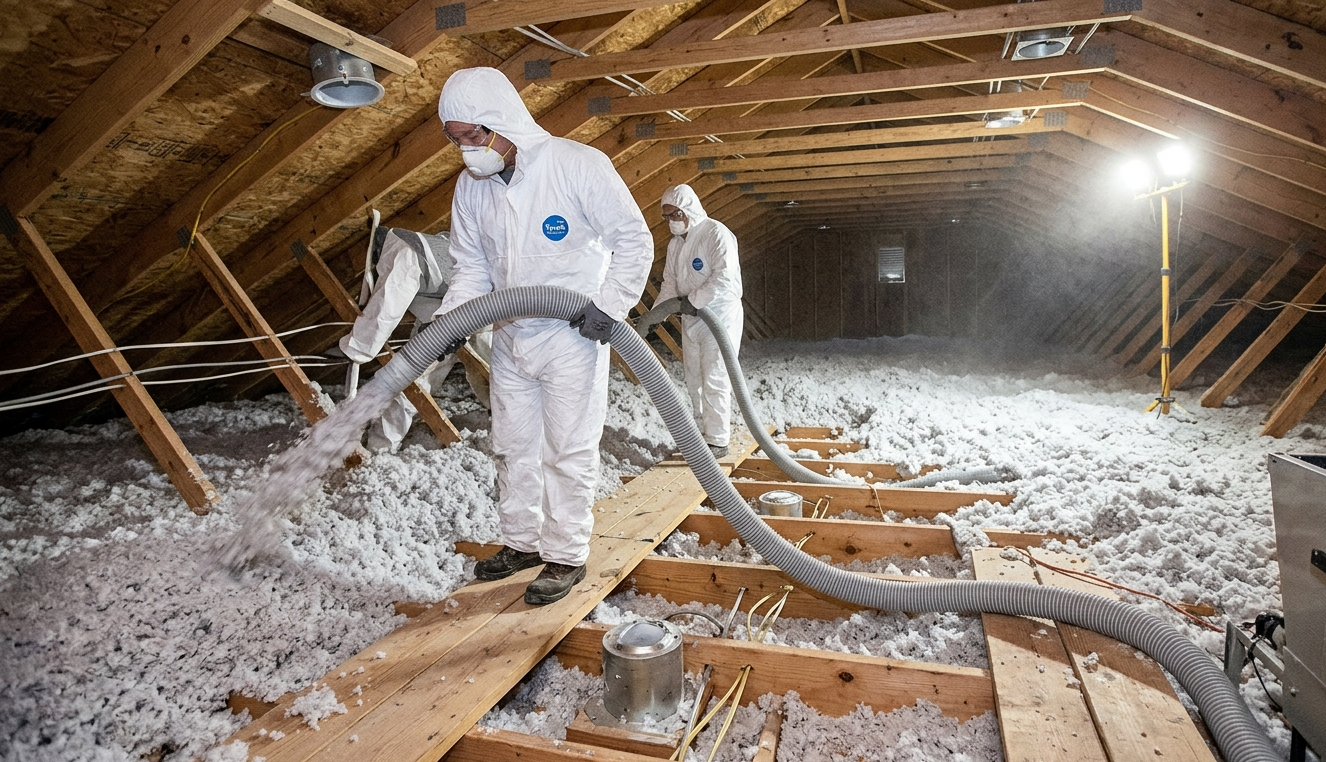
Blown-in material—typically made of fiberglass or dense cellulose—is applied using a specialized blowing machine that distributes loose fibers evenly across the entire attic floor.
- Best For: Hard-to-reach corners, irregular joist spacing, and topping off existing layers.
- Pros: Excellent coverage, seamless fill around wiring and pipes, high cost-effectiveness.
- Cons: Can settle slightly over time if low-density material is used.
Fiberglass Batts and Rolls
Batts are pre-cut blankets of flexible fiberglass rolled out between standard joist channels.
- Best For: Standard floor joist spacing in unfinished spaces with easy access.
- Pros: Readily available, straightforward installation for open spaces.
- Cons: Small gaps around pipes, light fixtures, or irregular framing significantly reduce overall performance.
Spray Foam Insulation
Open-cell or closed-cell polyurethane foam is sprayed directly onto the underside of the roof deck or attic floor, expanding instantly to form an airtight seal.
- Best For: Creating a fully conditioned roof cavity, sealing air leaks completely.
- Pros: Highest R-value per inch, acts as both a vapor barrier and an air barrier.
- Cons: Higher initial investment compared to traditional loose-fill or batt options.
The Critical First Step: Professional Air Sealing
A common mistake made during DIY projects is blowing new material directly over an unsealed attic floor. Thermal coverage resists heat conduction, but it does not block air movement.
Before adding new thermal material, a technician must perform thorough air sealing. This process involves locating and sealing every hidden gap, crack, and penetration on the floor deck using expanding foam or caulk. Common air-leakage points include:
- Recessed ceiling lights (can lights)
- Electrical wire pass-throughs and junction boxes
- Plumbing stack penetrations
- Exhaust fan housing units
- Drop-down attic access stairs and hatches
Failing to air-seal prior to adding fresh material leaves major pathways open for warm, humid air to migrate into your home, reducing the overall thermal performance by as much as 30%.
Major Long-Term Benefits of Upgrading
Investing in proper ceiling protection provides immediate and compounding returns for your household:
Lower Utility Costs
By locking in conditioned air, homeowners often experience reductions in monthly heating and cooling costs ranging from 15% to 30%. The project frequently pays for itself within just a few seasons.
Extended HVAC System Lifespan
When your thermal envelope is tight, your air conditioner and furnace do not have to work nearly as hard or run as long to maintain your desired thermostat temperature. Reduced strain directly extends the operational life of your HVAC equipment.
Superior Humidity and Noise Control
Quality thermal barriers damp external environmental noise, making your home significantly quieter. Properly installed systems also help control indoor humidity levels, preventing sticky air in summer and overly dry air in winter.
Reduced Carbon Footprint
Using less energy to heat and cool your residence directly decreases your household carbon footprint, making your home more environmentally friendly and sustainable.
Why Professional Installation Matters
While adding extra material might look like a simple weekend DIY project, proper installation requires technical expertise and specialized safety gear.
Working in confined roof spaces carries risks, including stepping through ceiling drywall, encountering hidden electrical wiring, or inhaling hazardous airborne particulates. Professional technicians possess the equipment to perform precise thermal imaging, ensure proper ventilation chutes (soffit baffles) remain unblocked, and apply uniform coverage that meets local building codes.
For complete home protection and maximum energy savings, turn to experienced technicians who specialize in professional attic insulation to inspect your roof space, seal air leaks, and install high-performance thermal materials tailored to your climate.entify hidden energy leaks, restore indoor comfort, and start saving money on every utility bill.