Commercial HVAC Maintenance Guide for Business Owners
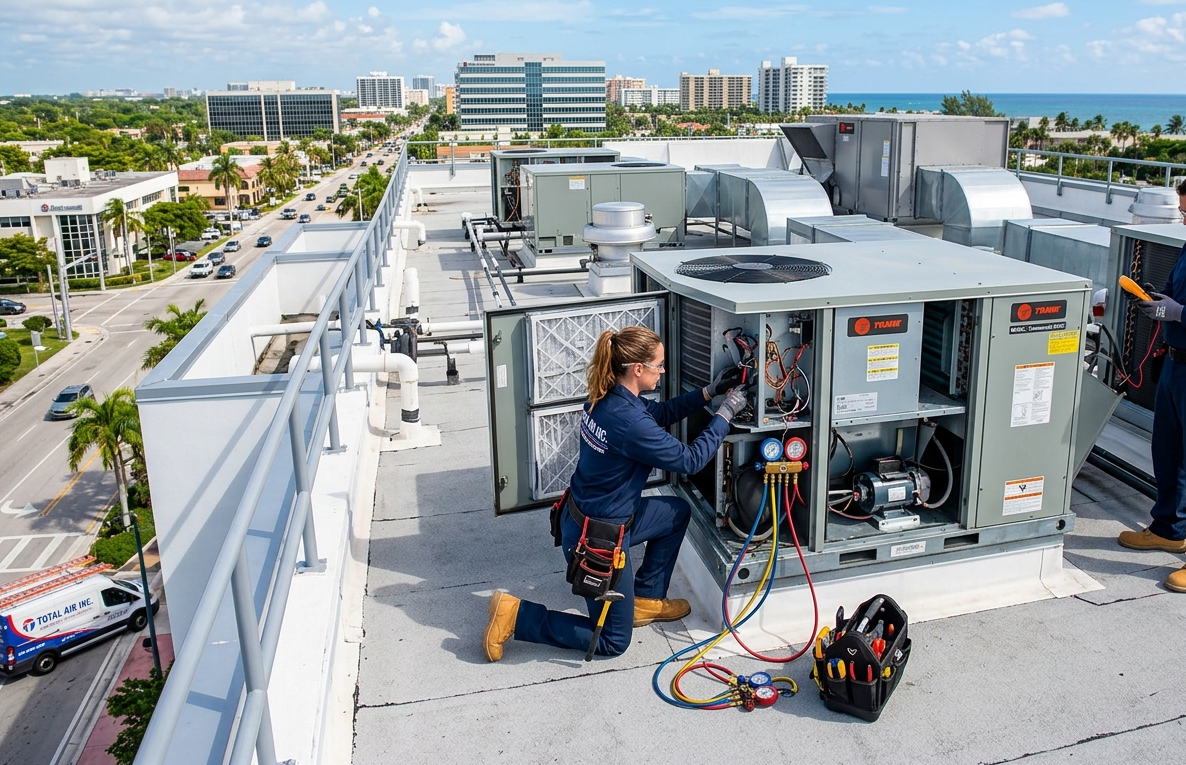
When managing a commercial facility, few operational components are as critical—or as costly when neglected—as your Heating, Ventilation, and Air Conditioning (HVAC) system. Whether you operate a bustling office complex, a high-traffic retail storefront, a sprawling industrial warehouse, or a specialized medical center, your HVAC infrastructure works around the clock to regulate indoor climate, preserve air quality, and protect valuable assets.
Unlike residential systems, commercial HVAC units operate under demanding workloads, often handling expansive square footage and variable occupancy loads across extreme weather conditions. Without a structured preventive maintenance strategy, commercial systems quickly experience reduced efficiency, increased energy consumption, and premature equipment failure.
This comprehensive guide explores everything business owners and facility managers need to know about commercial HVAC maintenance, including its primary financial benefits, key system components, seasonal checklists, and how routine service protects your bottom line.
Why Commercial HVAC Maintenance Matters for Your Business
For many business owners, HVAC systems fall into an "out of sight, out of mind" category until an unexpected breakdown occurs on the hottest summer afternoon. However, waiting for equipment failure before calling a technician is one of the most expensive ways to run a facility. Reactive repairs not only disrupt daily business operations, but they also lead to inflated utility bills and accelerated capital replacement cycles.
1. Significant Energy Savings
Commercial heating and cooling equipment accounts for a major portion of a building's overall energy consumption. As dirt, dust, and grime accumulate on internal components like evaporator coils, condenser coils, and blower fans, the system must work significantly harder to move air and transfer heat. This added strain increases electricity consumption. Regular preventive maintenance restores operational efficiency, helping businesses reduce energy costs by up to 40% annually.
2. Prevention of Costly Emergency Repairs
The overwhelming majority of severe HVAC failures begin as minor, easily fixable mechanical issues. A worn fan belt, a small refrigerant leak, or a loose electrical connection can spiral into a total compressor burnout if left unaddressed. Routine inspections allow certified technicians to spot wear and tear early, eliminating catastrophic failures and preventing costly emergency downtime.
3. Extended Equipment Lifespan
A commercial HVAC replacement represents a substantial capital investment. Standard commercial equipment typically lasts between 15 and 20 years when properly cared for. Neglecting routine service can cut that lifespan in half, forcing premature replacement. Routine oiling of bearings, electrical tightening, and regular coil washdowns keep internal components functioning smoothly, ensuring you maximize the lifespan of your original equipment investment.
4. Optimized Indoor Air Quality (IAQ)
Indoor air quality directly impacts the health, comfort, and productivity of your workforce and customers. Commercial buildings trap airborne contaminants, including dust, pollen, mold spores, and volatile organic compounds. High-efficiency filtration systems, clean ductwork, and properly calibrated ventilation keep fresh air circulating throughout your facility, reducing sick leave and creating a welcoming commercial environment.
Key Components Checked During Commercial HVAC Maintenance
Commercial heating and cooling infrastructure is complex, often involving multi-zone rooftop units (RTUs), chillers, cooling towers, variable air volume (VAV) systems, and specialized control networks. Comprehensive preventive maintenance requires systematic inspection across several core operational areas:
Air Filter Inspection and Replacement
Air filters serve as the first line of defense for your equipment and indoor air quality. Clogged filters restrict airflow, causing static pressure to rise inside ductwork and forcing blowers to work harder. Replacing commercial filters on a regular schedule prevents coil freezing, reduces system strain, and keeps airflow balanced across all building zones.
Evaporator and Condenser Coil Cleaning
Coils are responsible for the critical heat-exchange process in air conditioning and heat pump systems. Outdoor condenser coils collect dirt, leaves, debris, and atmospheric pollutants, while indoor evaporator coils can harbor moisture and organic buildup. Thorough chemical washing and coil rinsing restore optimal heat transfer, directly lowering monthly operating costs.
Refrigerant Level Verification and Leak Testing
Improper refrigerant levels alter pressure balances across the compressor and evaporator coils. Low refrigerant levels usually signal a leak, which not only degrades cooling capacity but can also cause severe compressor damage if operated long-term. Technicians measure subcooling and superheat levels, repair leaks, and ensure exact manufacturer-specified refrigerant charges.
Belt, Bearing, and Motor Service
Belts that drive blowers and fans gradually stretch, crack, and lose tension over time. Loose belts reduce airflow efficiency, while overtightened belts cause premature bearing failure. Regular maintenance includes checking belt alignment, adjusting tension, replacing worn drives, and lubricating heavy-duty motor bearings to minimize mechanical friction.
Electrical Connections and Safety Controls
Thermal expansion and operational vibrations can loosen electrical connections over time. Technicians inspect contactors, relays, capacitors, and terminal blocks, tightening loose wiring and measuring electrical voltage and amp draws. Securing these connections eliminates safety hazards, prevents short cycling, and protects expensive electronic control boards.
Thermostat and Building Automation Calibration
Commercial energy management relies heavily on precise control inputs. Technicians verify that digital thermostats and centralized building automation systems (BAS) are accurately calibrated, operating on energy-efficient schedules, and properly triggering heating and cooling stages without lag or overshoot.
Seasonal Maintenance Schedules: Spring and Fall Focus
To keep commercial systems in peak operating condition year-round, preventive service should occur at least twice per year—ideally in the spring before heavy cooling demands kick in, and in the fall prior to the heating season.
Spring HVAC Checklist (Cooling Focus)
- Clean condensate drain lines and drain pans to prevent water damage and microbial growth.
- Inspect condenser coils for debris accumulation from winter weather.
- Test compressor contactors and crankcase heaters.
- Measure air temperature differentials across supply and return ducts.
- Inspect blower motor assemblies and adjust belt tension.
- Verify economizer damper functionality for free-cooling potential.
Fall HVAC Checklist (Heating Focus)
- Inspect ignition controls, pilot assemblies, and gas burner flues for combustion efficiency.
- Check heat exchangers for cracks, rust, or physical corrosion that could leak carbon monoxide.
- Inspect heat pump reversing valves and defrost cycle controls.
- Check electric heating elements, sequence relays, and limit switches.
- Inspect and seal ductwork connections to eliminate conditioned air leaks.
- Review automated scheduling to match seasonal building occupancy hours.
Common Signs Your Commercial System Needs Immediate Attention
Even between scheduled maintenance visits, facility managers should stay alert to early warning signs of equipment distress. Catching these indicators quickly prevents major disruptions to your business operations:
- Unexplained Increases in Energy Bills: A sudden rise in utility costs without changes in weather or building usage points directly to declining mechanical efficiency.
- Inconsistent Temperature Zones: Hot or cold spots in distinct areas of the building indicate airflow imbalances, duct leaks, or failing control dampers.
- Unusual Noises or Vibrations: Squealing, grinding, clanking, or rattling sounds signal worn fan belts, failing motor bearings, or loose internal hardware.
- Foul Odors from Vents: Musty odors suggest standing water or biological growth in drain pans or ductwork, while burning smells point to electrical or motor over-heating.
- Frequent Short Cycling: If your commercial unit repeatedly turns on and off in rapid succession, it could indicate clogged filters, incorrect refrigerant charges, or failing safety sensors.
Partnering with Professional Commercial HVAC Specialists
Managing a commercial property requires juggling countless priorities, and HVAC maintenance should never be left to chance or unverified handymen. Commercial systems are larger, operate under higher voltages, and utilize specialized refrigeration circuits that demand certified expertise and precision tools.
Establishing a dedicated partnership with experienced commercial technicians gives facility managers peace of mind. Customized maintenance agreements cater directly to the unique requirements of your property type—whether you oversee office complexes, healthcare facilities, retail hubs, or industrial buildings. Scheduled routine visits reduce long-term operational risk, lower overhead costs, and ensure your building maintains an ideal indoor climate every day of the year.
Investing in proactive maintenance protects your valuable equipment assets, safeguards indoor air quality, and prevents emergency downtime from disrupting your operations. Establishing a reliable schedule for comprehensive commercial HVAC maintenance ensures that your heating and cooling equipment operates smoothly, safely, and efficiently across every season.
Frequently Asked Questions About Commercial HVAC Maintenance
How often should commercial HVAC systems undergo routine maintenance?
Most commercial facilities benefit from maintenance performed at least twice a year—typically once in the spring before heavy cooling demands and once in the fall before winter heating. High-use facilities or specialized environments like medical centers or restaurants may require quarterly inspections.
What is the expected lifespan of a commercial HVAC unit?
With regular preventive maintenance, commercial HVAC systems generally last between 15 and 20 years. Neglecting routine service can shorten equipment lifespan significantly due to excess mechanical wear and tear.
Can preventive maintenance really reduce energy expenses?
Yes. Studies show that clean coils, properly tensioned belts, correct refrigerant levels, and clean filters can reduce commercial energy consumption by up to 40% compared to neglected systems.