Anatomy of Your AC System
What Your AC System Actually Does
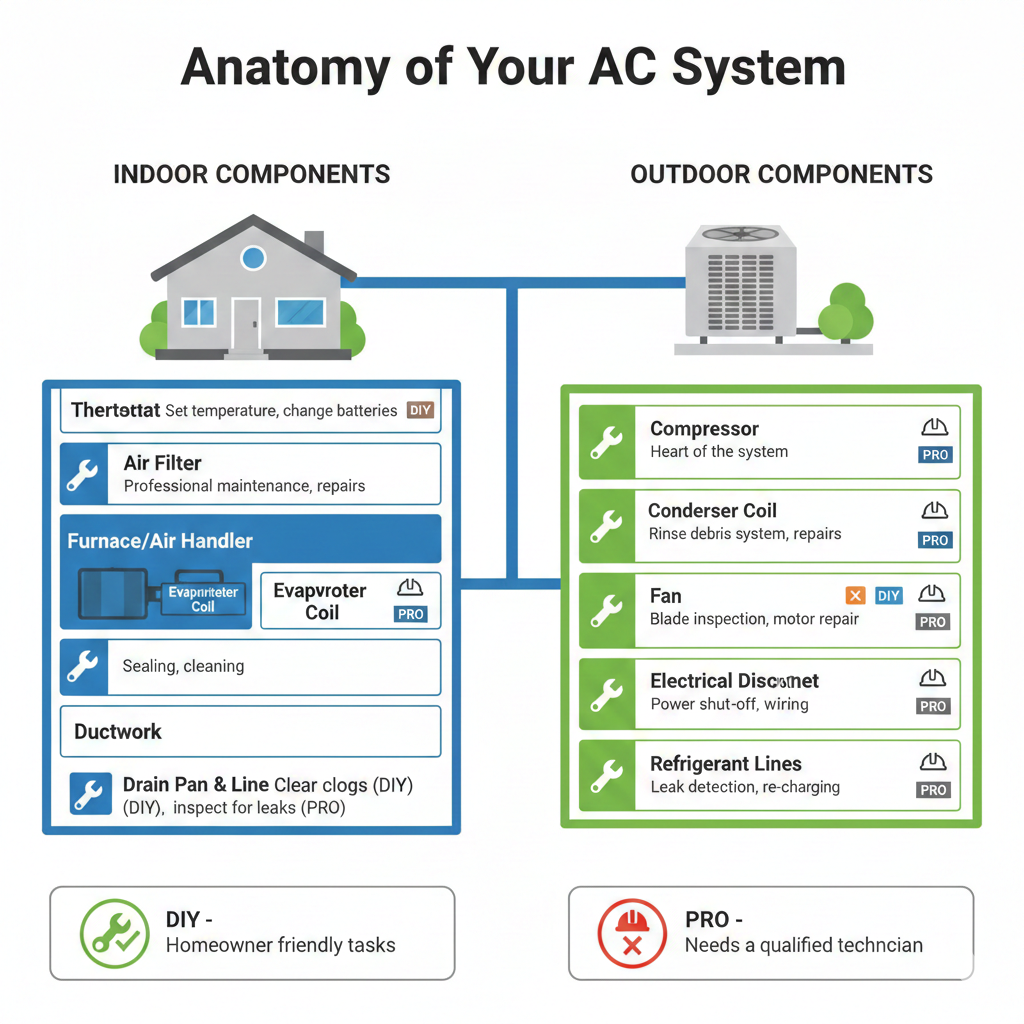
A central air conditioner does one main job: it moves heat out of your home and sends it outside, rather than “creating cold.” To do that, it uses a closed loop of refrigerant and several key components that work together in a cycle: evaporator coil, compressor, condenser coil, expansion device, and the air handler and ducts.
Think of your AC as two halves of the same system. The indoor side absorbs heat and moisture from your air, and the outdoor side releases that heat into the outside air. The refrigerant lines connect these two halves so heat can constantly travel from inside to outside during a cooling cycle.
Indoor Components: The “Cool Air” Side
Thermostat (Control Center)
The thermostat is the control switch that tells your AC when to turn on and off based on your temperature setting. Modern thermostats can also manage schedules, fan settings, and sometimes humidity or zoning, depending on your system.
DIY-friendly:
Changing temperature settings or schedules.
Replacing the thermostat batteries if your model uses them.
Pro only:
Installing a new thermostat, adding new control wires, or troubleshooting low-voltage control issues.
Air Handler or Furnace Blower
On a typical split system, the indoor unit is an air handler or a furnace with a blower that pushes air across the evaporator coil and through your ducts. This blower is what you hear moving air through vents when the system is running, and it must be sized correctly for the coil and ductwork.
DIY-friendly:
Keeping the area around the unit clear and accessible.
Listening for new, unusual noises and reporting them early.
Pro only:
Adjusting blower speeds, wiring, or replacing motors and control boards.
Evaporator Coil (The “Cold” Coil)
The evaporator coil is usually hidden in a metal box called a plenum on top of a furnace or inside an air handler. As warm indoor air passes over this coil, the refrigerant inside absorbs heat and evaporates, cooling the air and often removing moisture at the same time.
DIY-friendly:
Keeping filters clean to prevent the coil from getting clogged with dust.
Pro only:
Cleaning the coil, repairing leaks, or opening the sealed cabinet, which involves refrigerant and electrical work.
Air Filter and Return Air
Before air reaches the evaporator coil, it passes through a filter located in a return grille, filter rack, or air handler door. The filter removes dust, pet hair, and other particles to protect your system and improve indoor air quality.
DIY-friendly:
Checking the filter every 30–60 days and replacing or washing it as recommended.
Upgrading to the correct type and MERV rating suggested by a professional.
Pro only:
Modifying filter racks or returns, or solving airflow problems due to restrictive filters.
Condensate Drain Pan and Line
As the evaporator coil cools your air, it pulls moisture from the air that condenses on the coil and drips into a pan. From there, a condensate drain line carries this water safely out of your home, often to a drain or outside termination.
DIY-friendly:
Visually checking the drain line for obvious clogs or kinks.
Pouring a small amount of approved cleaning solution (like a diluted vinegar mix) into a designated service port if recommended by your contractor.
Pro only:
Clearing severe clogs, repairing or rerouting drain lines, and dealing with water damage or float switches.
Outdoor Components: The “Heat Rejection” Side
Condenser Unit (Outdoor Cabinet)
The big metal box outside houses several major parts: the compressor, condenser coil, condenser fan, and various electrical and safety components. This unit’s job is to release the heat picked up indoors into the outside air.
Homeowners often call this whole cabinet “the compressor,” but the compressor is just one component inside. Keeping the cabinet clean and unobstructed is crucial for efficiency and longevity.
Compressor (The Heart of the System)
The compressor sits inside the outdoor unit and pumps refrigerant through the system. It compresses low-pressure refrigerant gas into a high-pressure, high-temperature gas, which then flows through the condenser coil.
DIY-friendly:
None. This part should not be opened or handled by homeowners.
Pro only:
Any testing, repair, or replacement; it requires specialized tools, gauges, and EPA-certified refrigerant handling.
Condenser Coil and Fan
The condenser coil wraps around part of the outdoor unit and looks like a radiator or series of metal fins and tubes. As the hot refrigerant gas passes through the coil, the condenser fan pulls outdoor air across it to remove heat, turning the gas back into a liquid.
DIY-friendly:
Gently rinsing the outside of the coil with a garden hose from the outside in, with power off, if your contractor has approved it.
Keeping at least a couple feet of clearance around the unit by trimming shrubs and moving debris.
Pro only:
Deep coil cleaning, straightening damaged fins, or working inside the cabinet around electrical components.
Fan Motor, Contactor, and Capacitor
The condenser fan motor spins the fan that moves air across the coil, and it must operate correctly to prevent overheating and compressor damage. Inside the control section, a contactor acts as a heavy-duty relay, and capacitors provide an electrical boost to start and run motors.
DIY-friendly:
Visually checking that the fan is spinning normally when the unit is running.
Turning the unit off at the disconnect or breaker if there is smoke, burning smells, or obviously stalled parts.
Pro only:
Replacing motors, contactors, and capacitors; testing live electrical circuits; and diagnosing short circuits or burned connections.
Connecting Components: The Refrigerant and Air Paths
Refrigerant Line Set
The line set is a pair of copper pipes that run between your indoor evaporator coil and outdoor condenser. One line is larger and usually insulated (suction line carrying cool vapor back to the compressor), and the smaller line carries high-pressure liquid refrigerant from the outdoor unit to the indoor coil.
DIY-friendly:
Keeping the insulation on the larger line intact and reporting any obvious damage.
Pro only:
Repairing, brazing, or replacing lines, and charging or recovering refrigerant due to strict safety and environmental rules.
Expansion Device
Near the evaporator coil is a metering device—often a thermostatic expansion valve or a fixed orifice—that reduces the pressure of the liquid refrigerant before it enters the coil. This pressure drop allows the refrigerant to evaporate at a low temperature and absorb heat from your indoor air.
DIY-friendly:
None. This component is sealed inside the refrigerant circuit.
Pro only:
Diagnosing issues, replacing devices, and adjusting superheat or subcooling.
Ductwork and Supply Vents
Ducts carry cooled air from the air handler to supply vents in each room and return air back to the system. Properly sealed, insulated ducts are vital in hot, humid climates because leaky or uninsulated ducts can waste a significant amount of cooling energy.
DIY-friendly:
Keeping supply and return vents unblocked by furniture or curtains.
Gently vacuuming vent grilles and reporting rooms that are consistently too hot or too cold.
Pro only:
Sealing, sizing, or redesigning duct systems, and diagnosing airflow or balancing issues.
What Homeowners Can Safely Do (DIY Zone)
A clear infographic can use green icons for “DIY OK” tasks to make these stand out at a glance. Safe, high-impact tasks include:
Changing or cleaning air filters on schedule.
Keeping at least a few feet of clearance around the outdoor unit and gently rinsing off loose debris with the power off if recommended by your contractor.
Checking the thermostat settings and schedules and using energy-efficient setpoints.
Visually checking for water around the indoor unit and reporting leaks quickly.
Making sure vents and returns are open and unobstructed throughout the home.
These simple items improve airflow, reduce strain on the system, and often prevent breakdowns or comfort issues. They also give homeowners a sense of control without exposing them to electrical or refrigerant risks.
What Should Always Be Left to a Pro
A matching infographic section can use red “pro only” icons near anything involving high voltage, refrigerant, or sealed components. Work that should always be handled by a licensed HVAC technician includes:
Opening the outdoor unit cabinet or indoor coil cabinet for repairs or cleaning.
Handling any refrigerant tasks such as leak detection, recharging, or replacing compressors, coils, or line sets.
Replacing electrical parts, including contactors, capacitors, fan motors, control boards, or high-voltage wiring.
Modifying duct systems, adding returns, or changing blower settings that affect airflow and equipment safety.
Diagnosing abnormal noises, short cycling, tripped breakers, or system shutdowns.
These tasks require specialized tools, training, and licenses, and doing them incorrectly can damage equipment, void warranties, or create safety hazards. The article can encourage homeowners to use the DIY checklist first, then call a professional when anything goes beyond basic cleaning and inspection.